Why This Fails Locally
South St. Paul isn't a big town by household count
Around 8,300 houses, which is a fraction of the roughly 41,500 households spread across our whole service area. That size matters for spring work because it means the calls we get from here aren't high-volume like some of the bigger suburbs closer to Farmington; they're spread out, and a lot of them come from the same stretch of housing stock built around the same time.
- 8,300 houses
- 41,500 households
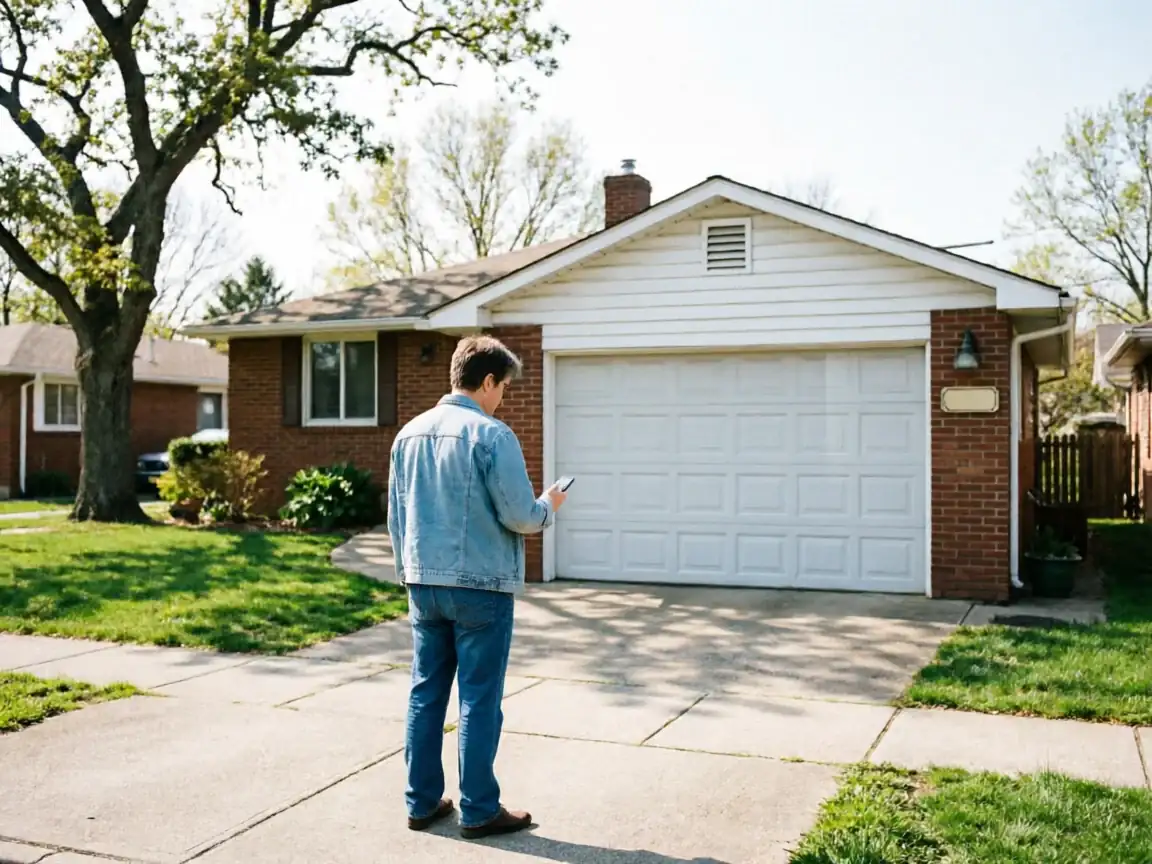
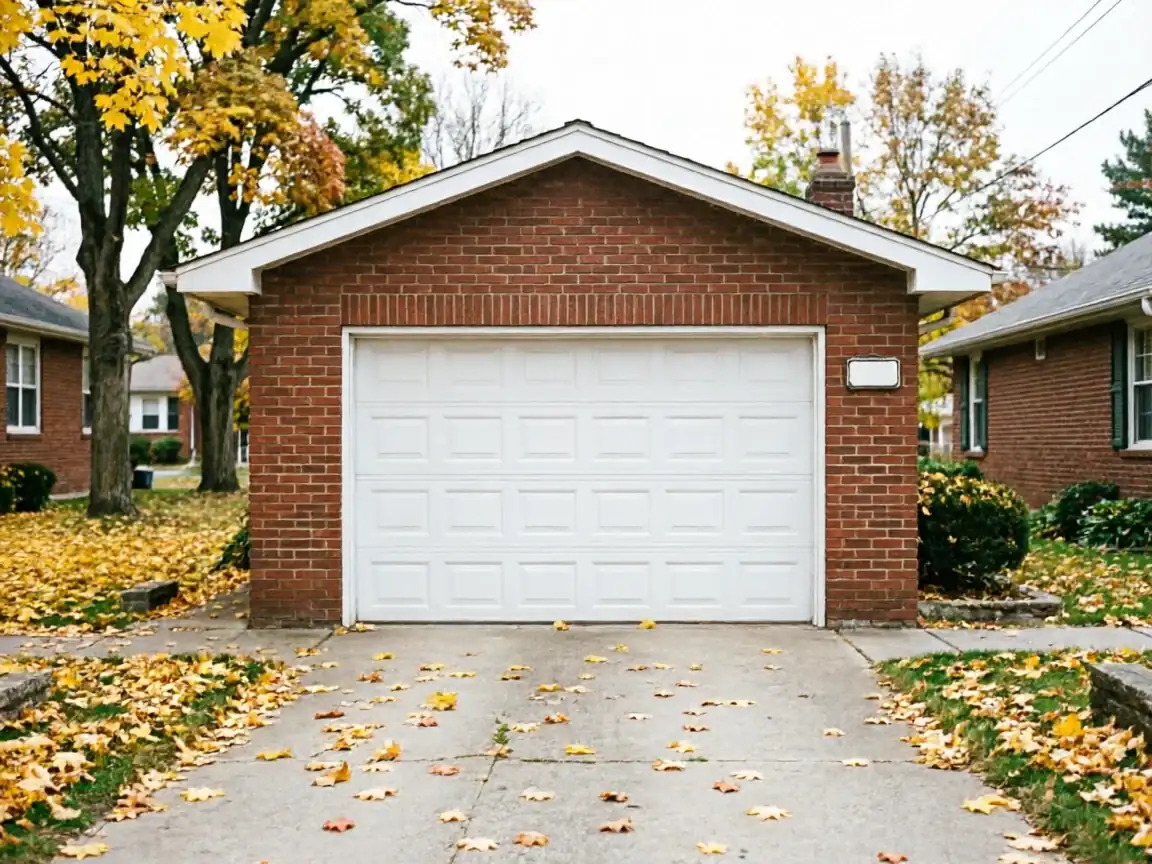
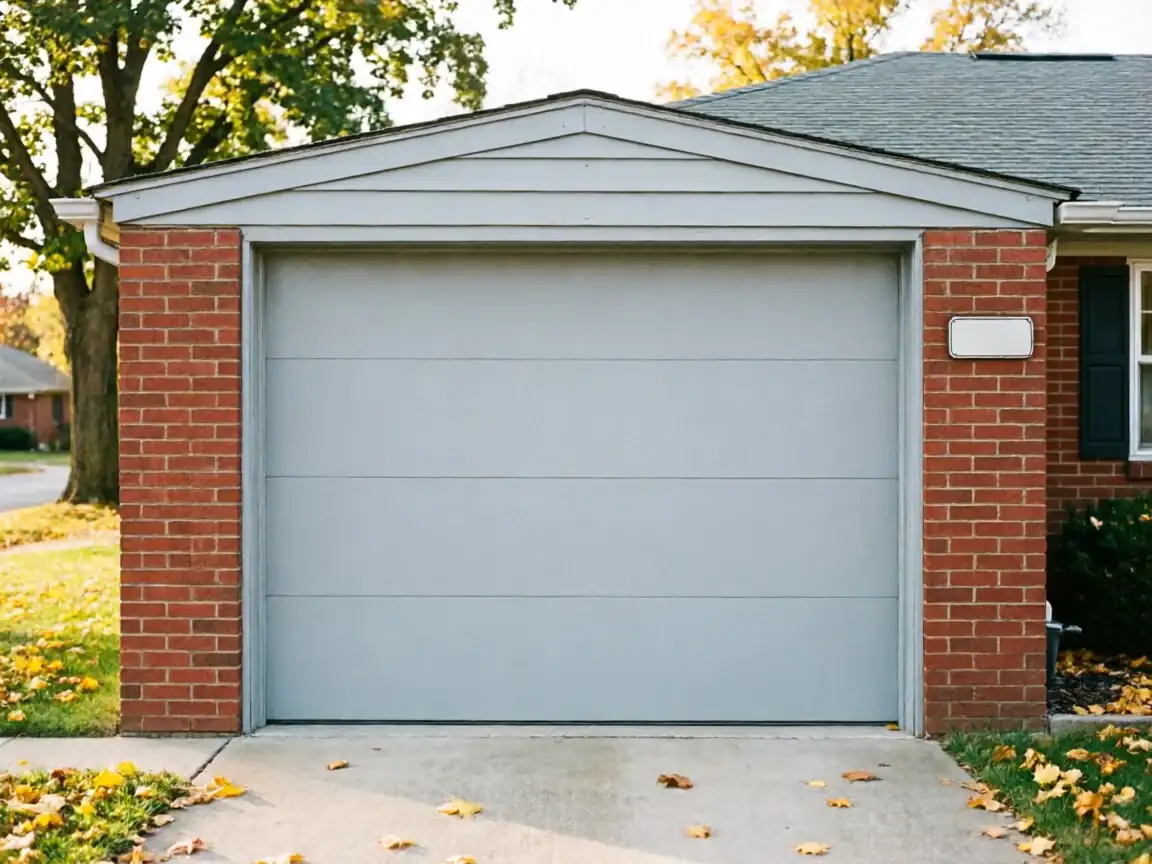
Most homes in South St. Paul went up around 1957
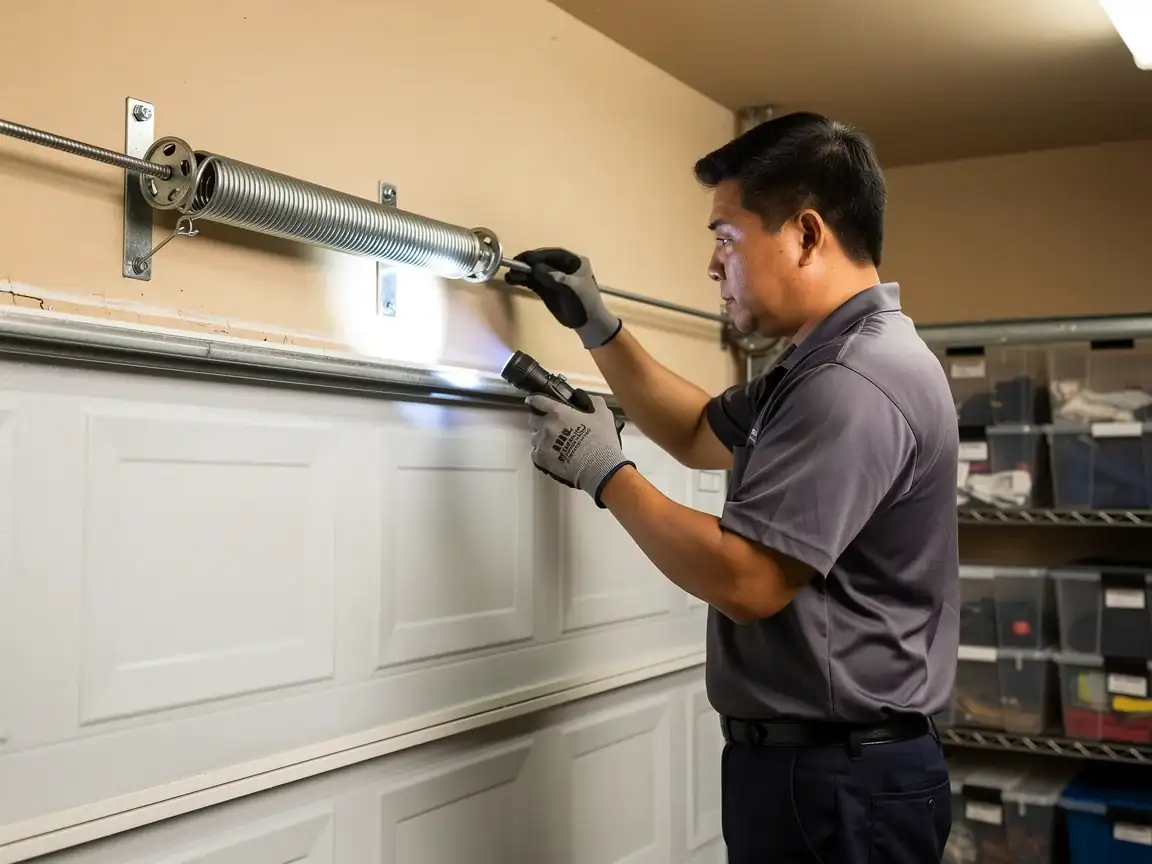
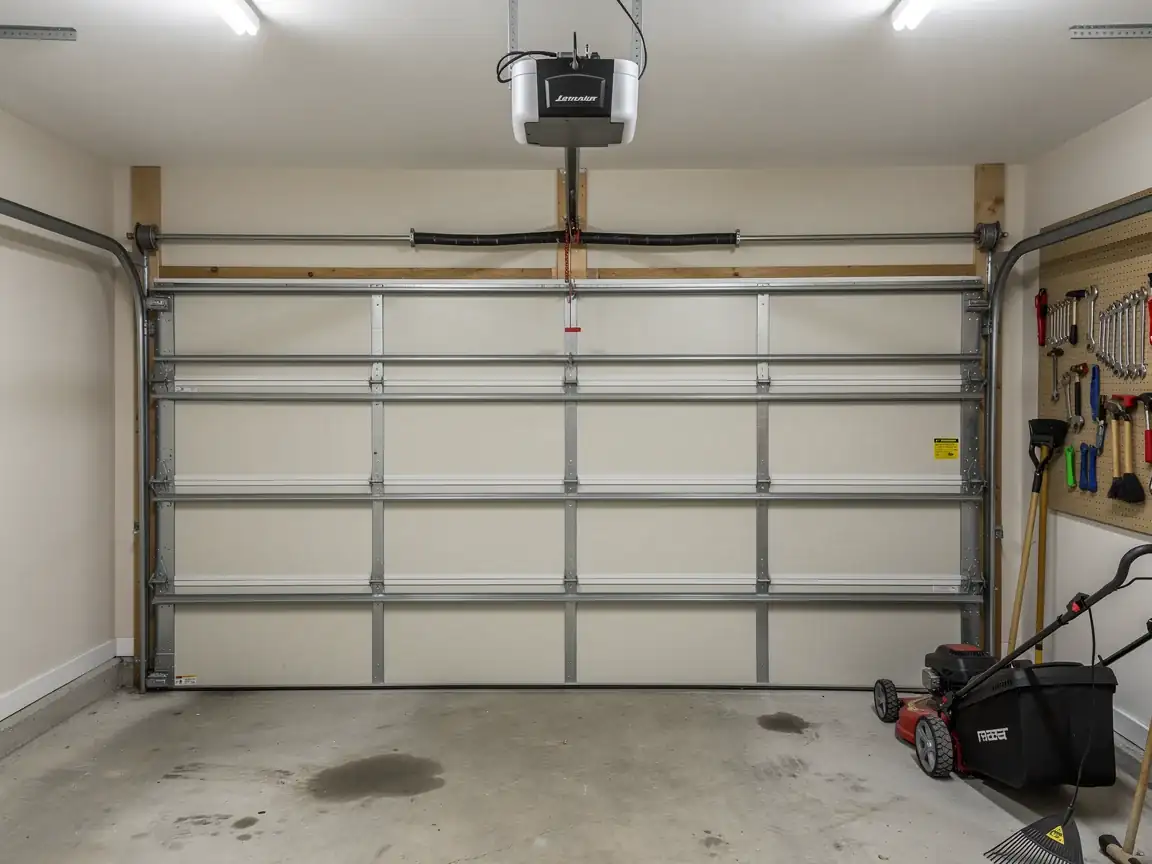
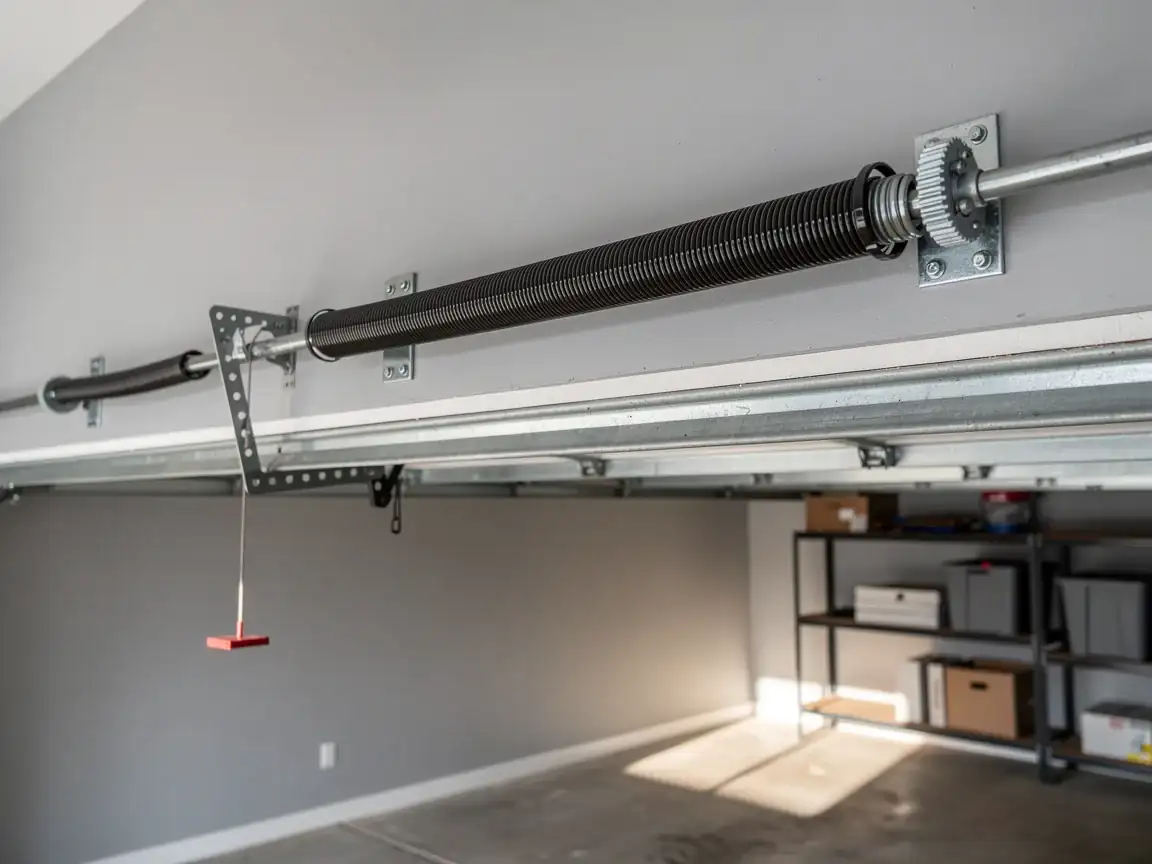
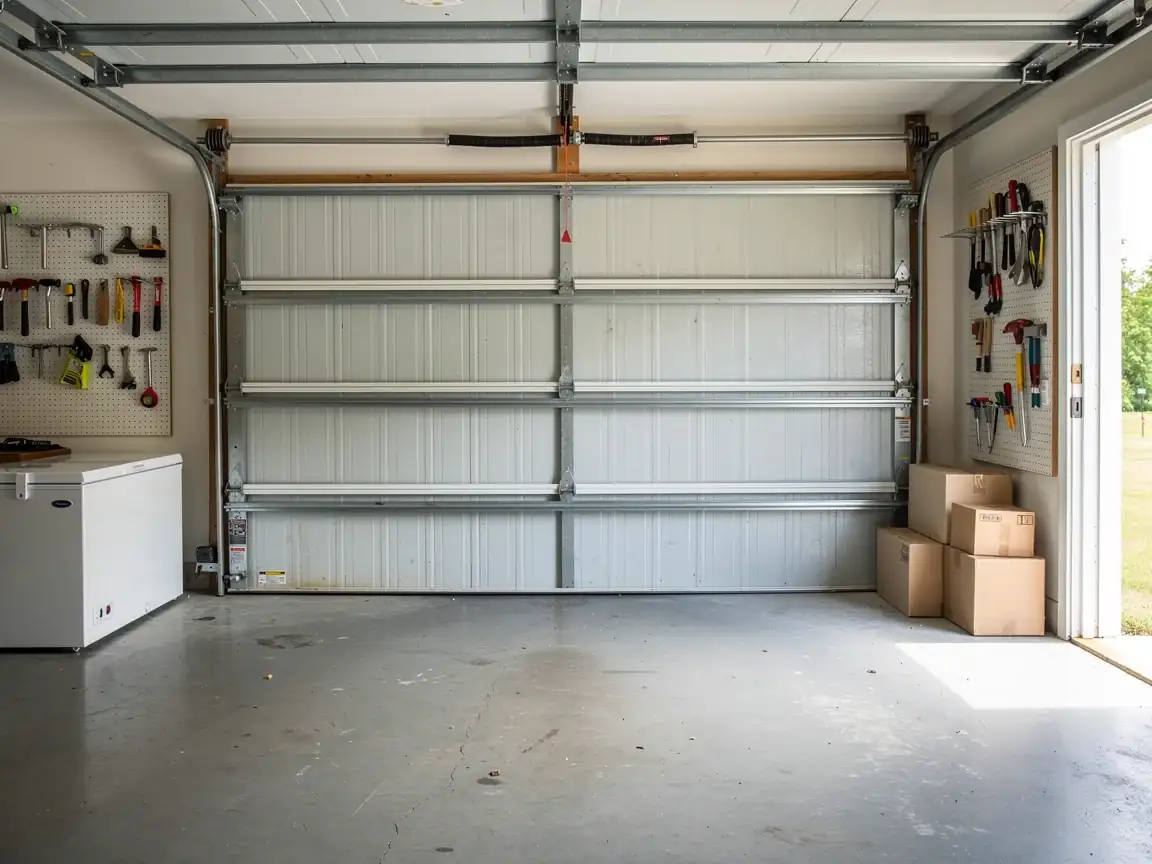
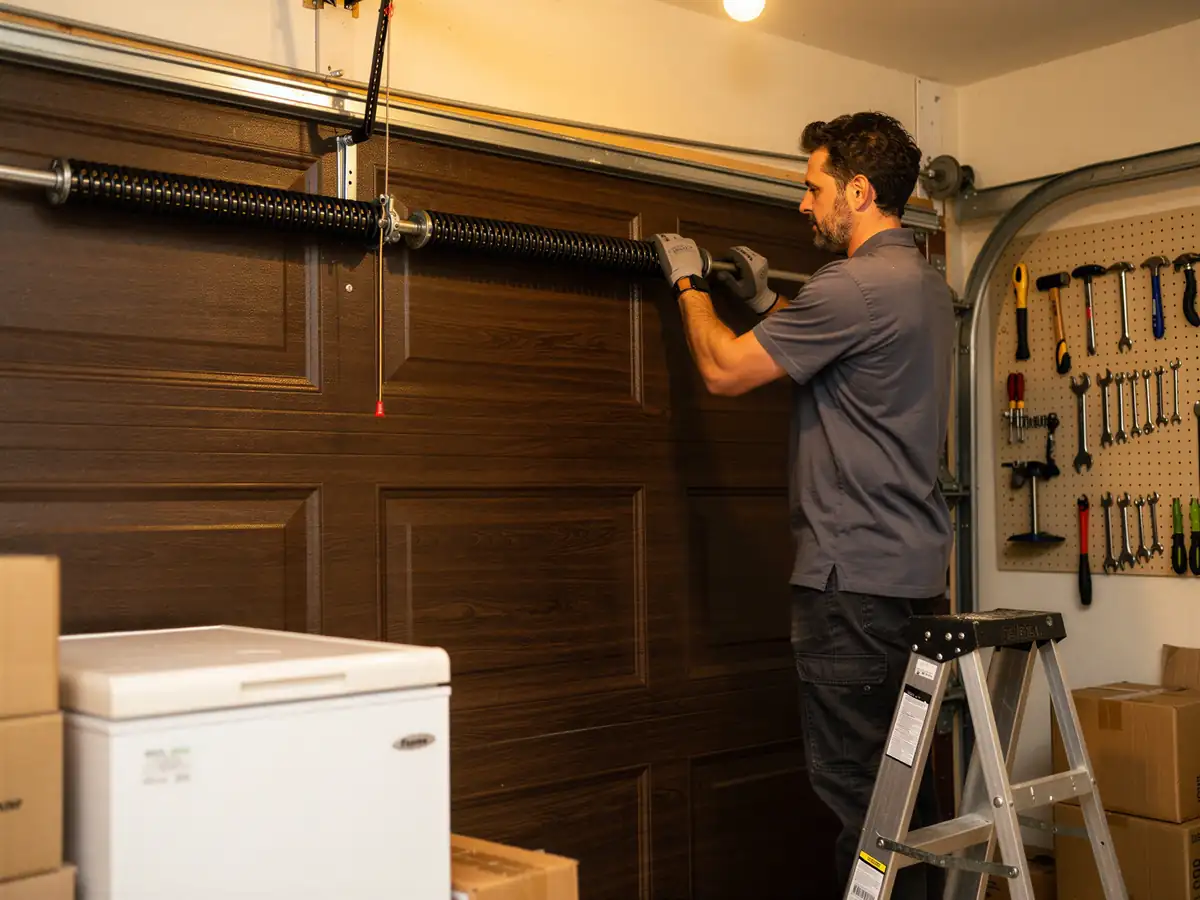
That's a full generation before the 1983 median build year you'll find across the rest of the service area. A door installed on a house from the late 1950s almost never has the torsion-spring-over-the-header setup you see on anything built after 1980. You're more likely looking at an older extension spring system mounted along the horizontal tracks, sometimes with a single center spring, sometimes with two side springs and no containment cable at all. Those designs fatigue differently than modern torsion springs, and when they go, they tend to go loud and sudden rather than gradually losing tension.
That's the fault we actually see here
Not a generic 'garage door spring broke,' but a specific mismatch between 1950s-era extension hardware and the stress it's been carrying for seven decades.
How Long You Are Without the Door
We run this route out of Farmington, and South St. Paul sits about 17 miles out - on the far side of our coverage map compared to towns like Coates or Hampton, which sit closer to 8 or 9 miles in. That distance doesn't change what we can fix, but it does mean the drive is part of the math when you're scheduling, especially if the spring failed with the door stuck down and your car on the wrong side of it.
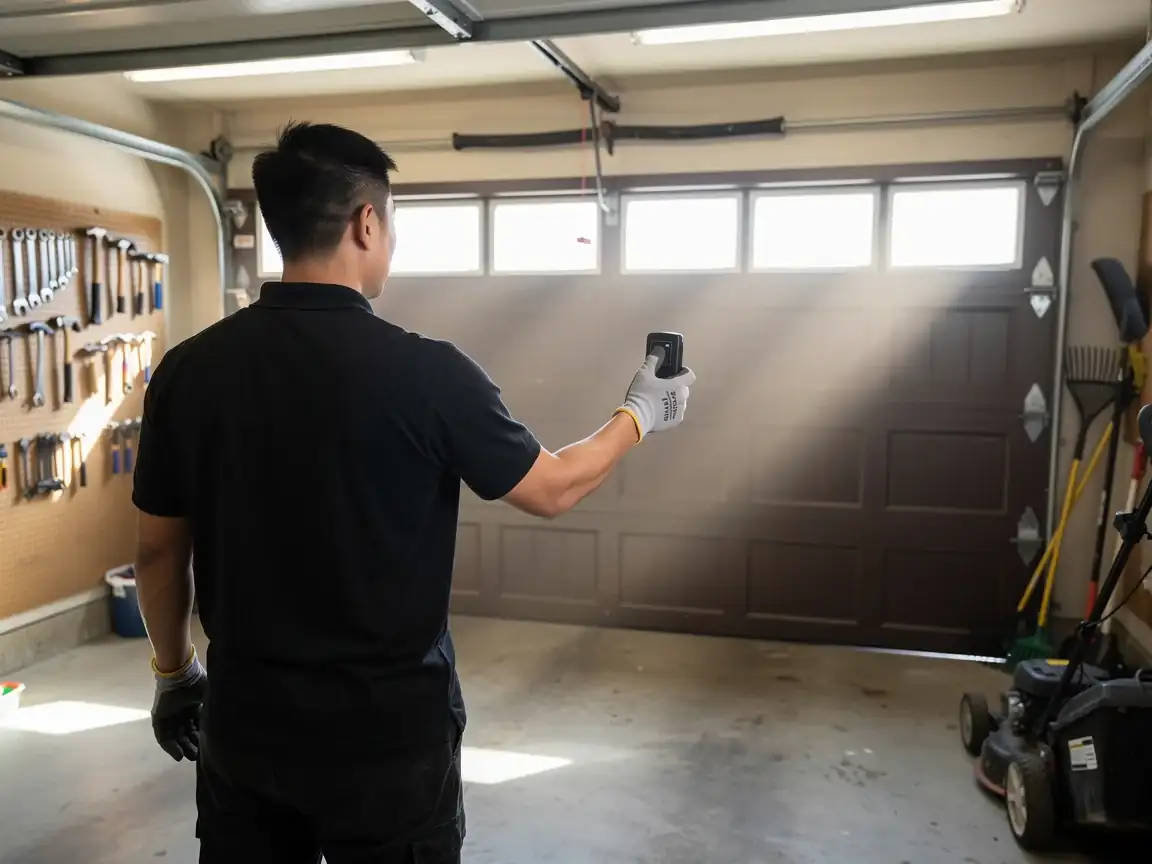
If the spring let go while the door was open, you've got a bigger problem than just being locked out - an unsupported door can drop fast and that's a safety issue, not just an inconvenience. If it failed with the door closed, you're at least not blocked in, but the opener will keep trying to lift dead weight and can burn out the motor if you keep hitting the button. Either way, don't force it by hand repeatedly. The cold winters here also mean steel fatigues faster in January than in July, so a spring that's been groaning all fall is more likely to snap once the temperature really drops.
Booking a Visit
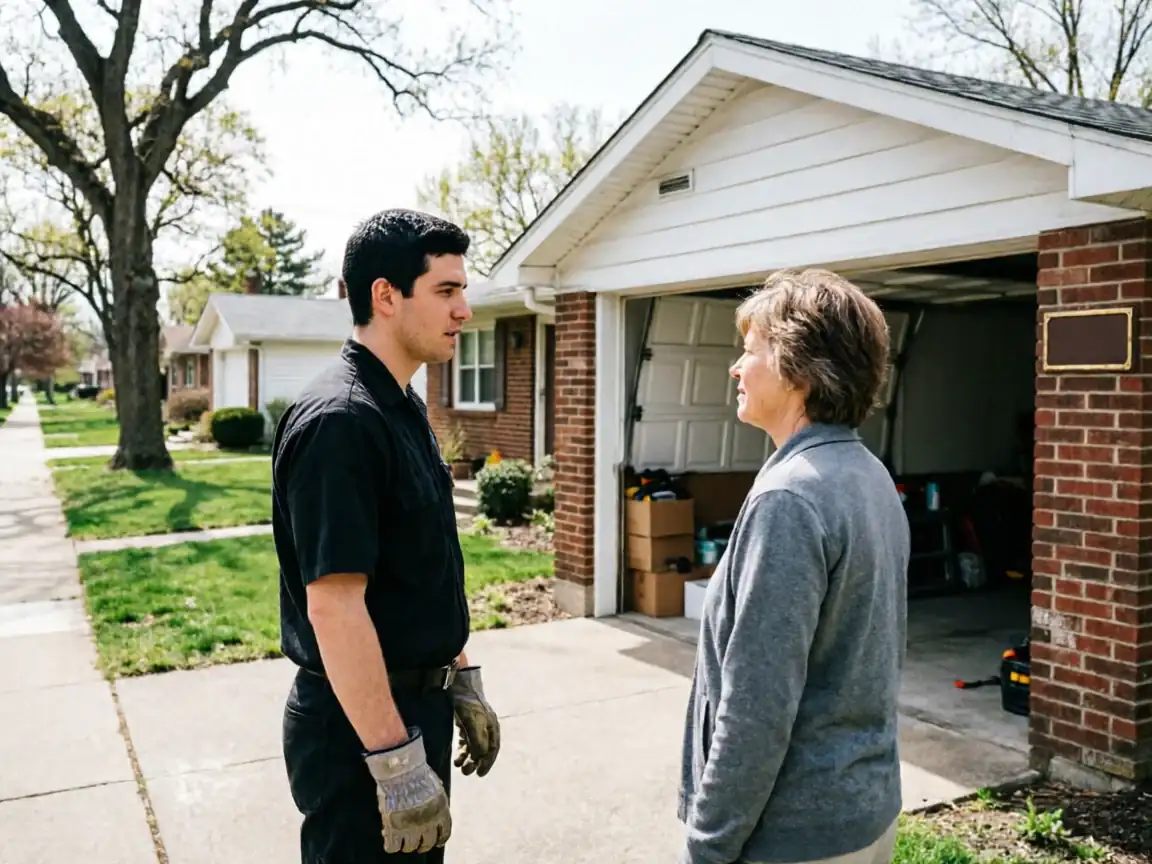
Because South St. Paul is on the outer edge of our coverage from Farmington, we schedule these calls with the drive time built in rather than treating every address the same. Tell us whether the door is stuck open or stuck closed when you call - that changes how urgent the visit is and what we bring on the truck.
We'll ask the age of the house if you know it, since homes from the 1950s era common in this town often need extension-spring parts that differ from what we stock for newer torsion systems. Knowing that ahead of time means fewer surprises once we're on site, 17 miles from the shop, rather than discovering mid-job that we need a part we didn't load.
The Complications
The main complication in a town like South St. Paul is parts matching
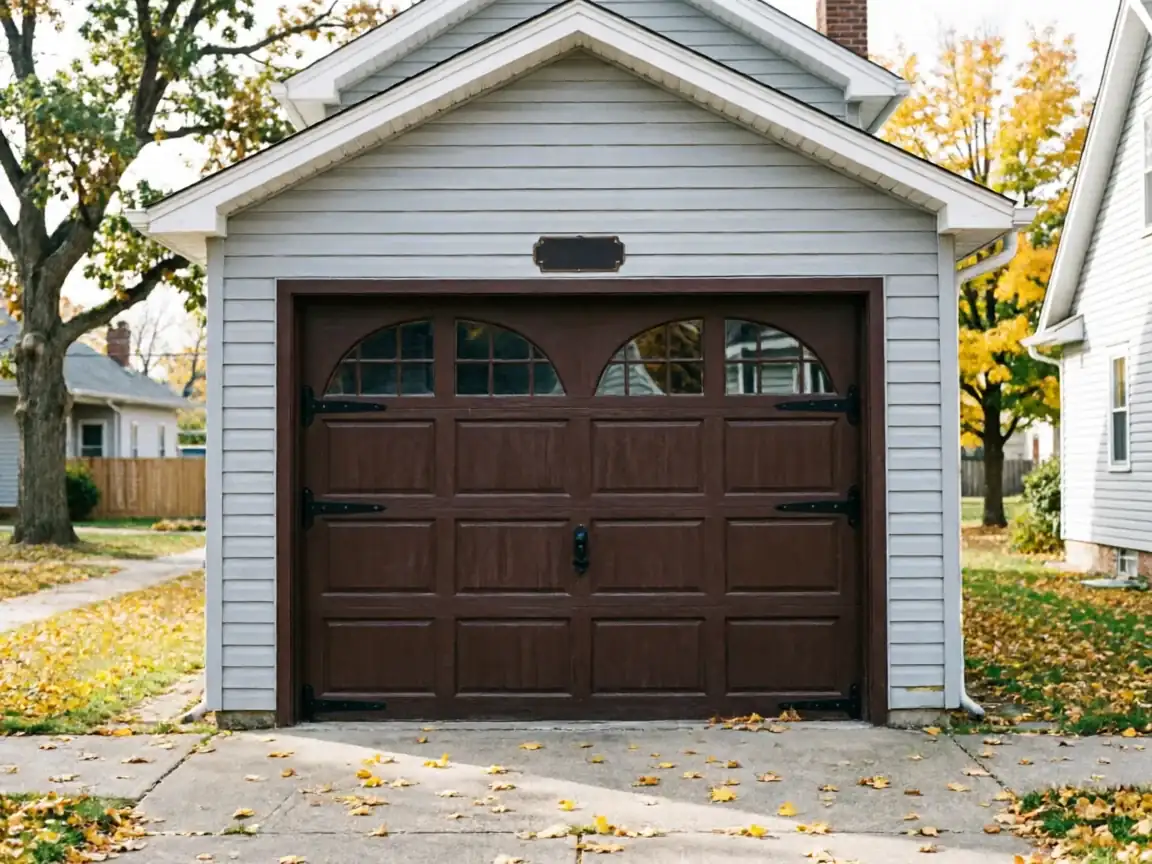
A house built in 1957 may have had its door replaced once or twice over the decades, so you can't always assume the spring type matches the house's original age - somebody may have swapped in a torsion conversion kit in the 1990s, or they may still be running the original extension system. We won't know which until we're looking at it.
Cold-weather fatigue is the other factor
In a moderate-cold climate like this one, galvanized spring coatings hold up reasonably well, but the steel itself still loses elasticity faster through repeated winter cycles than it would in a warmer region. That's part of why a spring that's lasted twenty years can suddenly snap in a cold stretch rather than failing gradually.
Honest limitation: if the spring failure has already warped the track or bent a panel
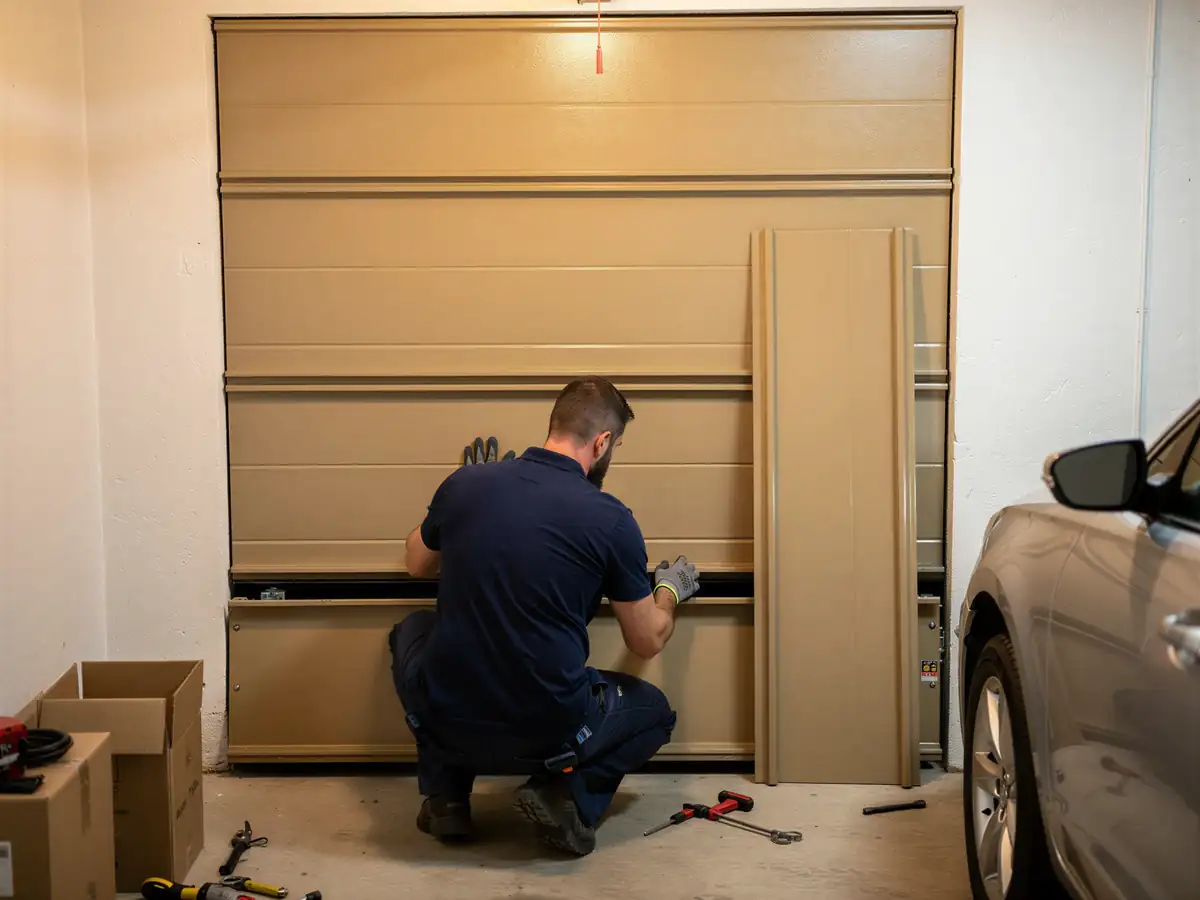
Which happens more often on these older extension setups when the spring snaps under load - a spring swap alone won't fix it, and we'll tell you that up front rather than replacing the spring and sending you off with a door that still won't track straight.
Parts We Carry
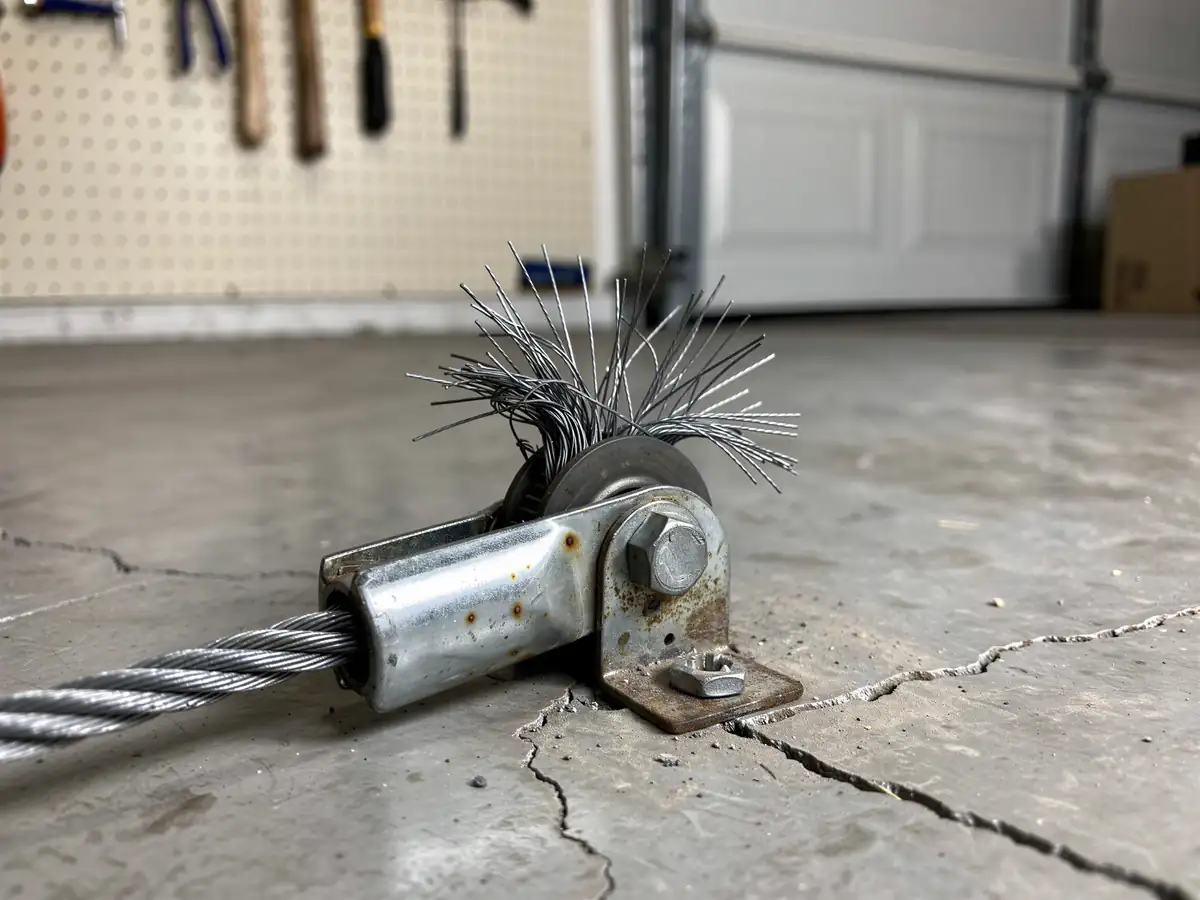
For a town with as much 1950s-60s stock as South St. Paul, we carry extension springs in the common sizes you'd expect for horizontal-track residential doors, plus the torsion springs and cables used on doors that have already been converted or replaced. We also keep safety cables for extension setups that were installed without one - a lot of the original 1950s installs predate that requirement.
What we don't stock on the truck is anything custom-wound for a nonstandard door opening, which shows up occasionally on older homes that have been modified over the years. If that's the case, we'll measure on site and order the right spring rather than force a close-enough substitute onto your door.