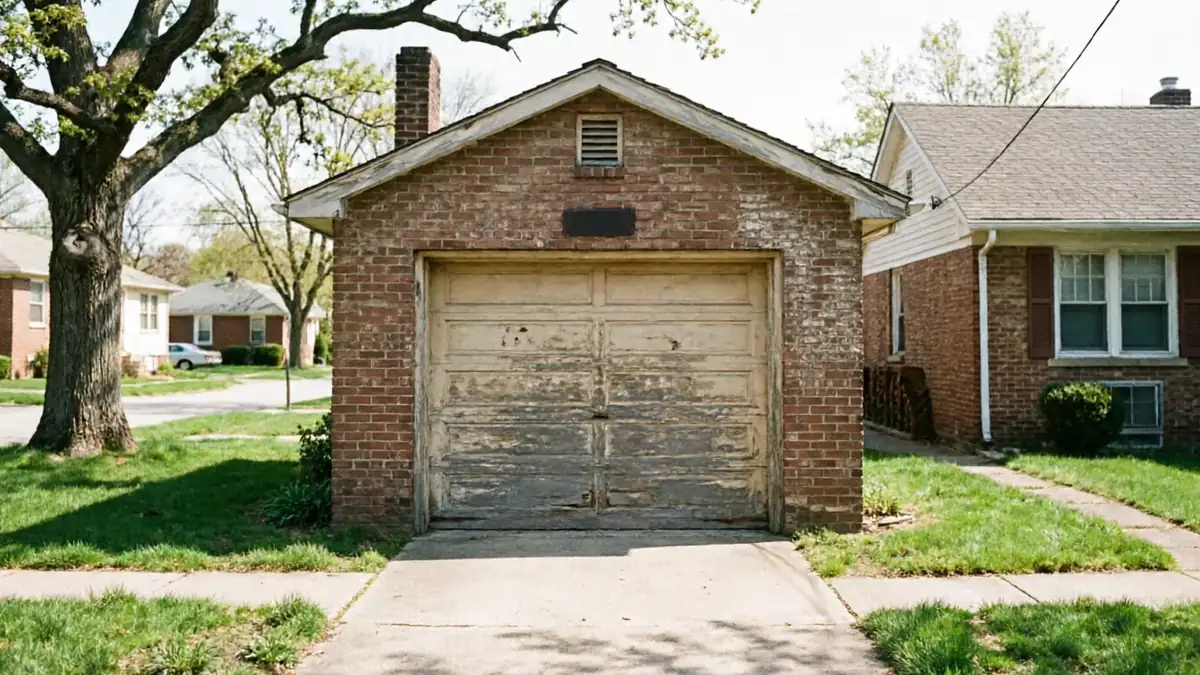
How Local Conditions Play In
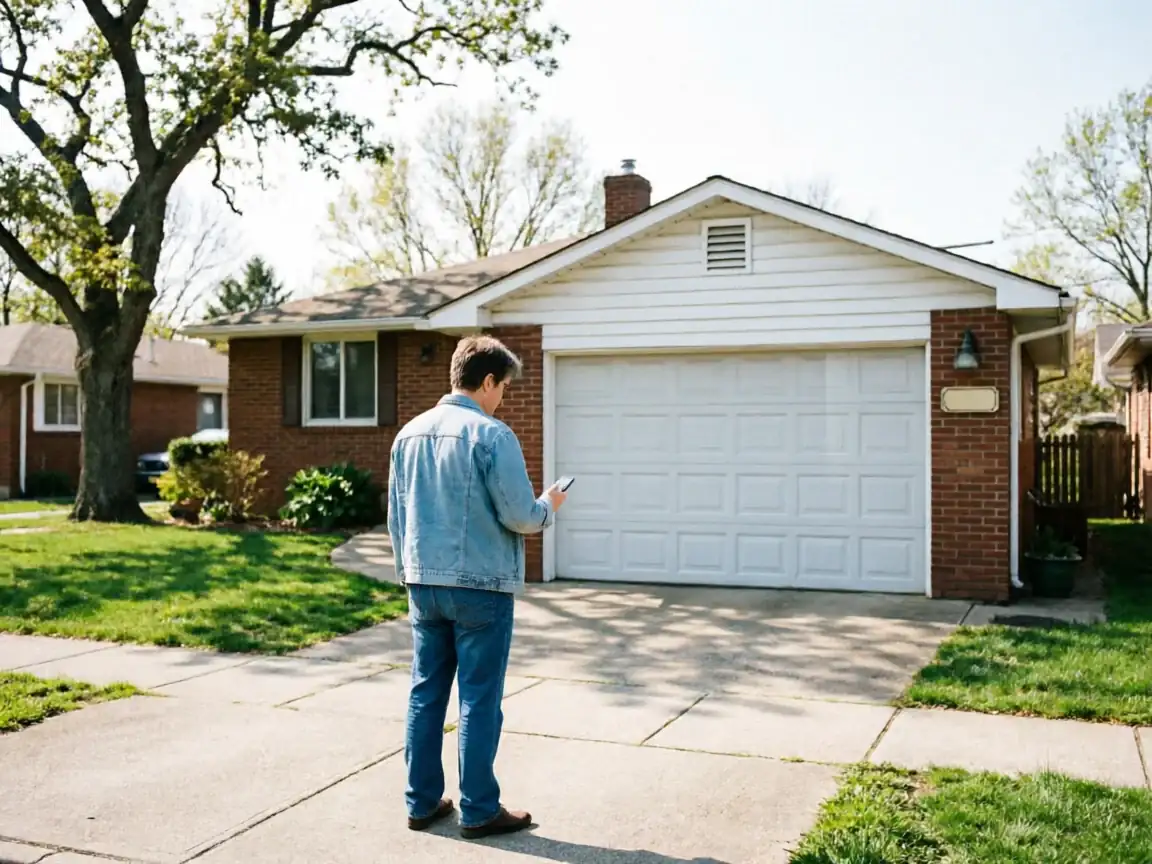
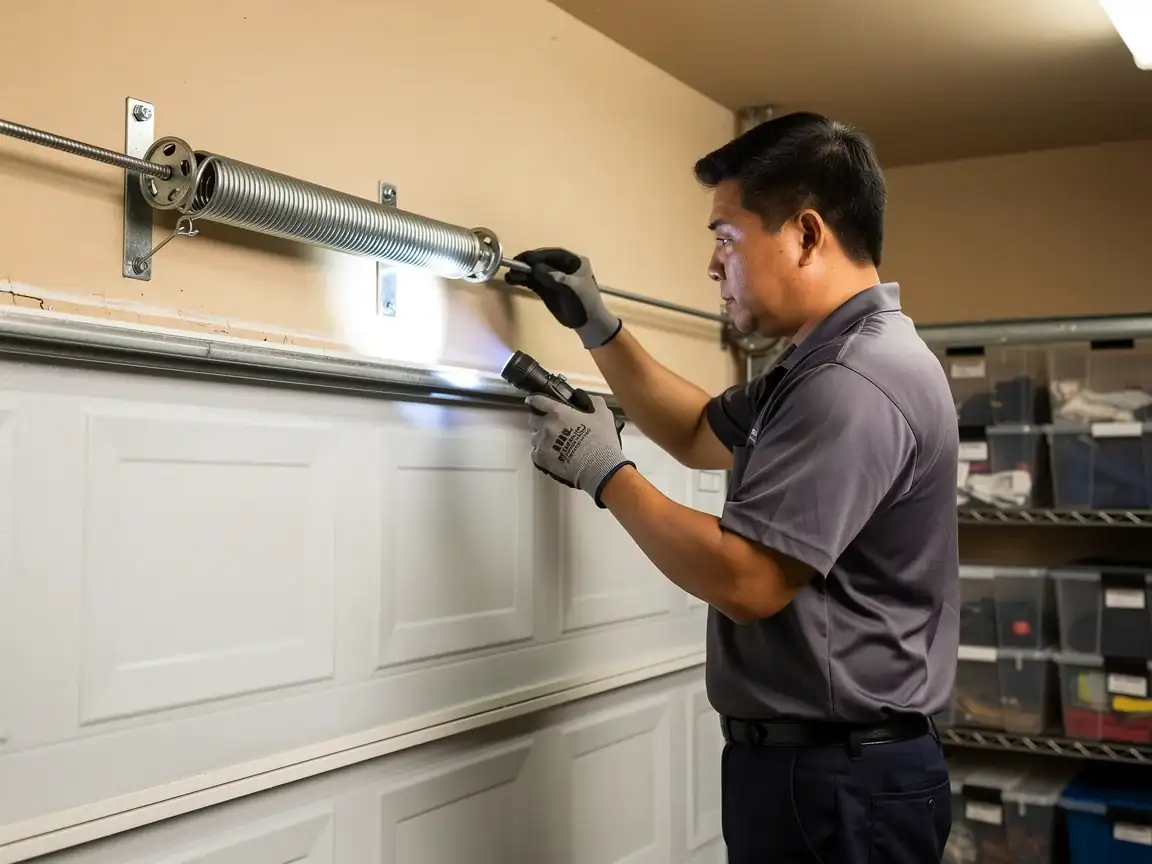
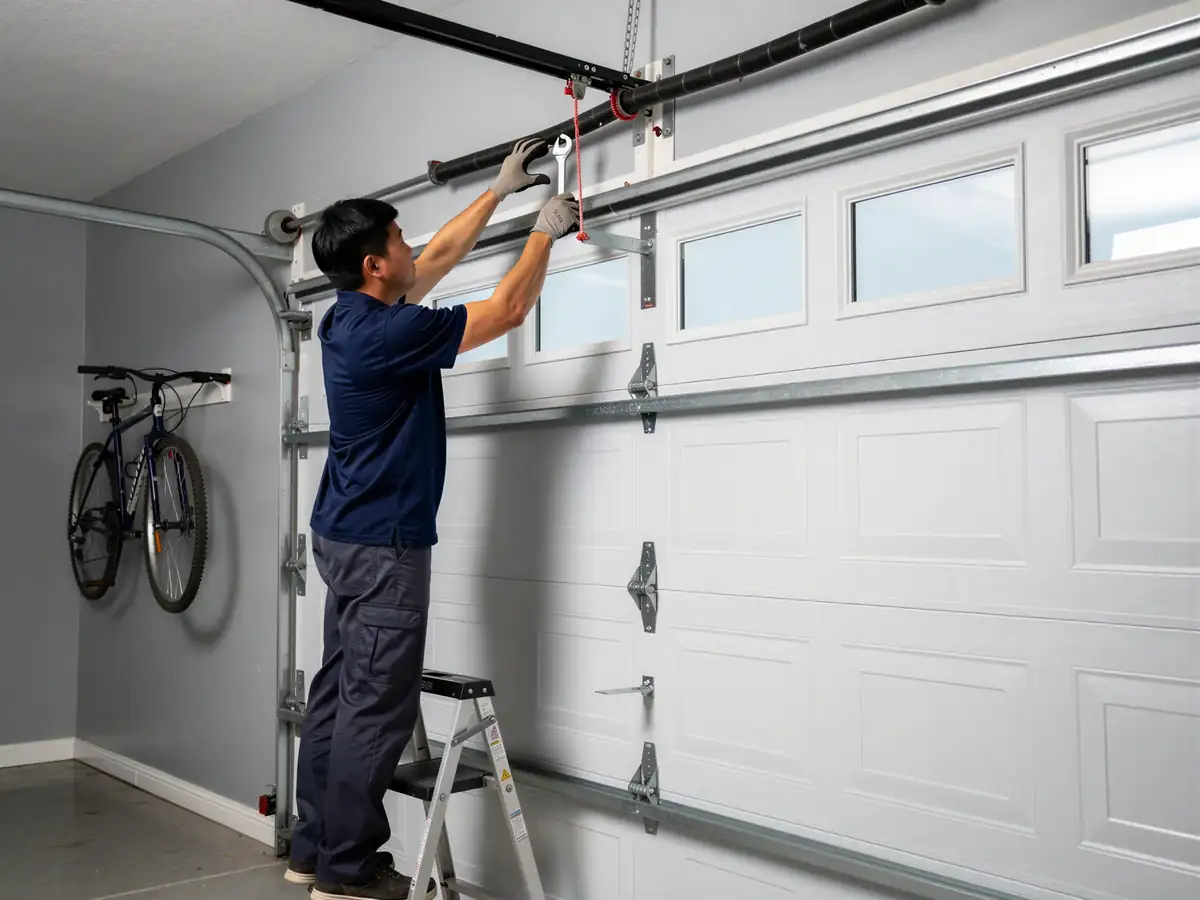
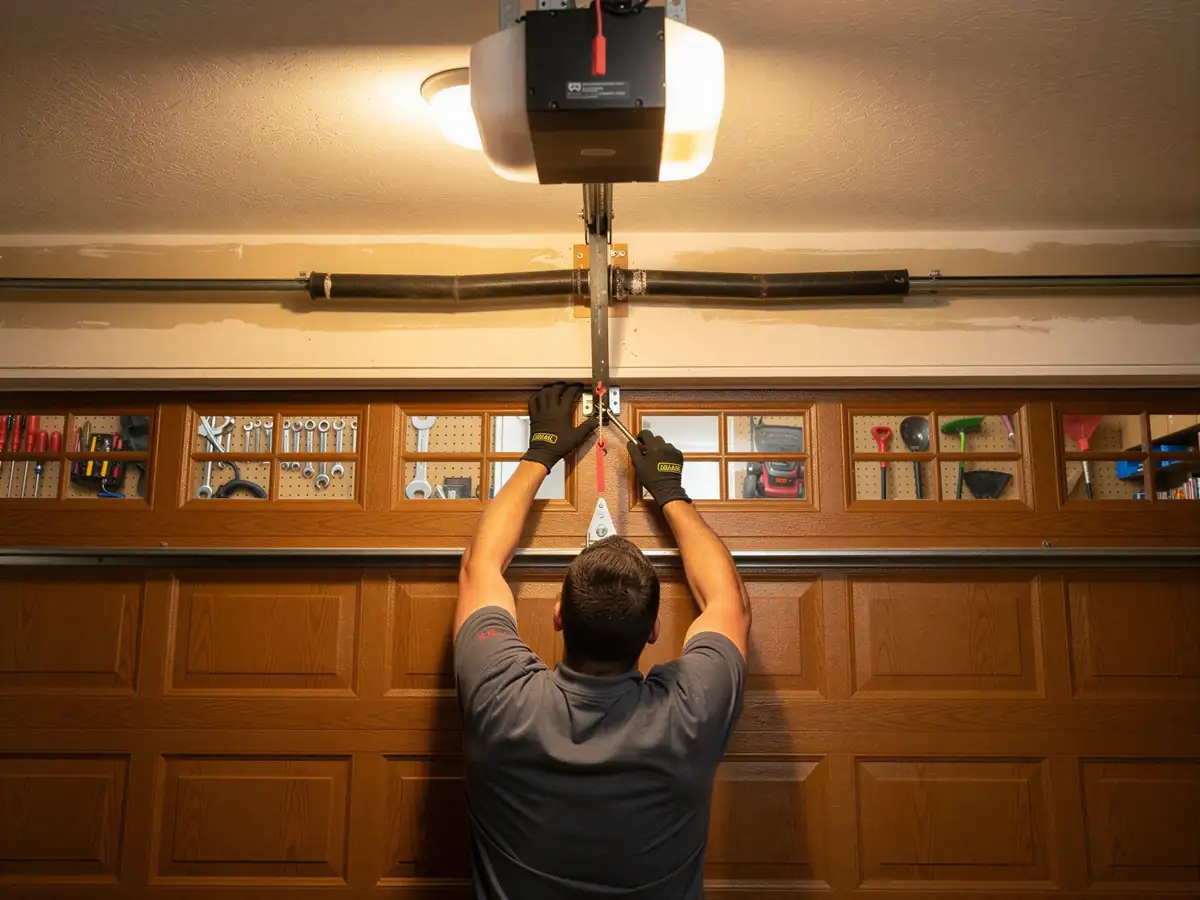
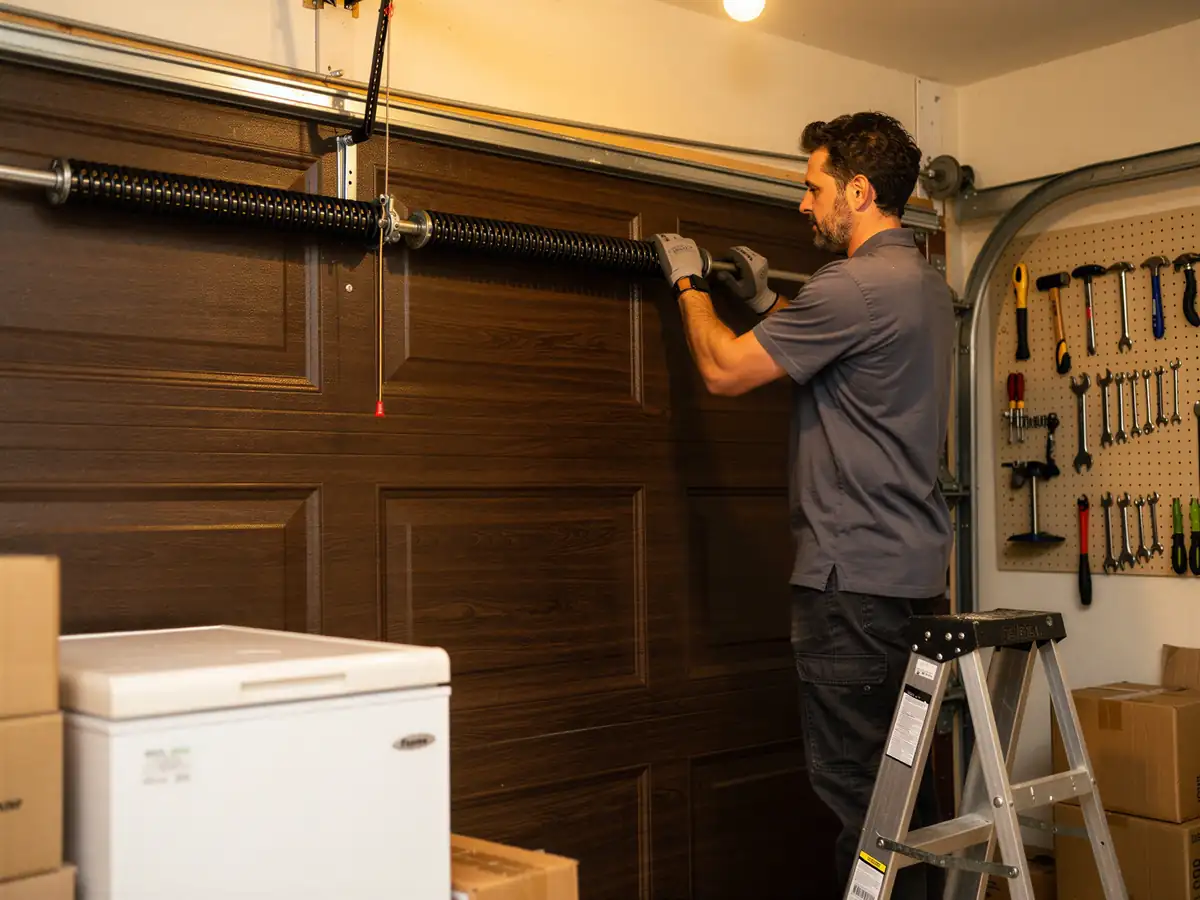
We're in a cold, moderate climate band here, not the brutal extreme-cold zones further north, but cold enough that steel contracts, lubricant stiffens, and torsion springs lose a measurable amount of lift every winter. On a door from the 1983 median build year, that's four decades of seasonal contraction cycling through the same spring and the same bearing plate. Galvanized hardware from that era holds up fine structurally, but the grease packed in at the factory is long gone, and nobody's replaced it since. That's why a door that worked fine in October seizes in January: it's not the cold breaking something new, it's the cold exposing wear that's been building since the Reagan administration. Houses built closer to 2004 fare a little better, since balanced torsion systems and better weatherstripping were more standard by then, but even those doors are now pushing twenty years into a climate that's hard on steel and hard on seals both.
The Problem
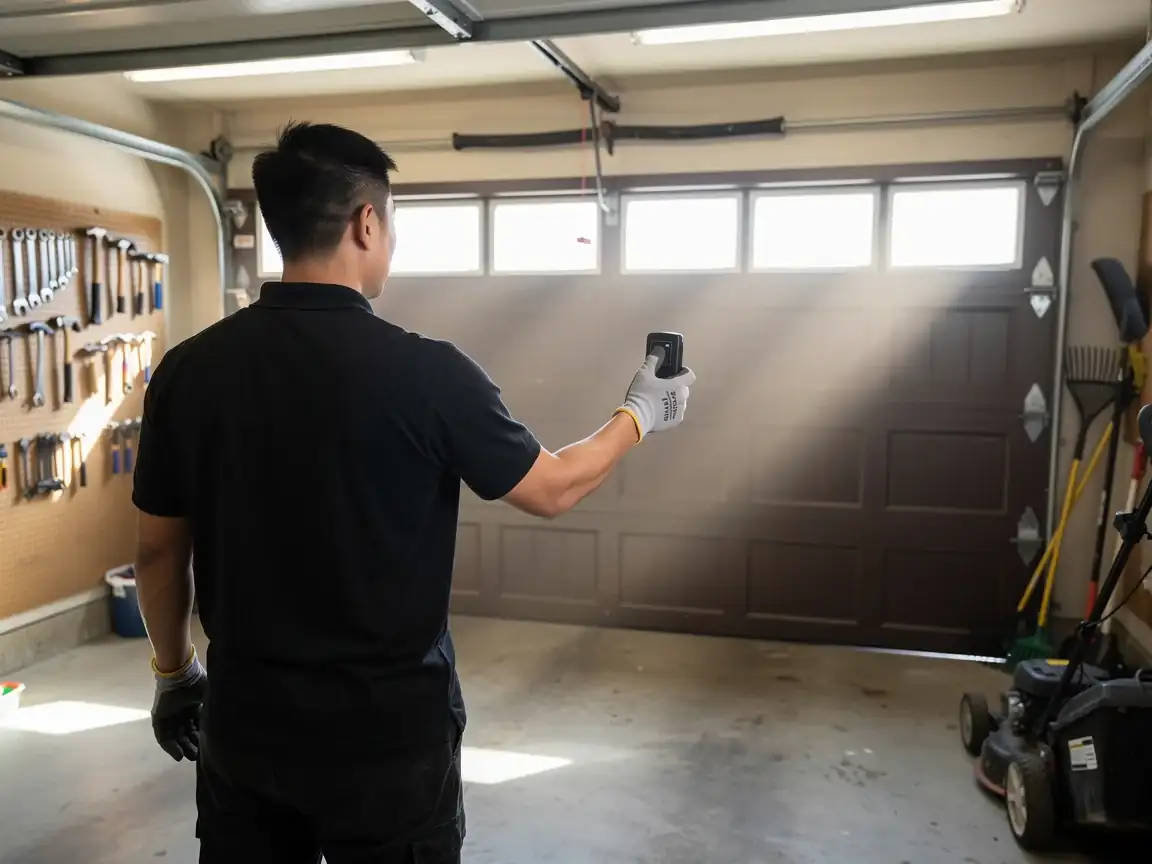
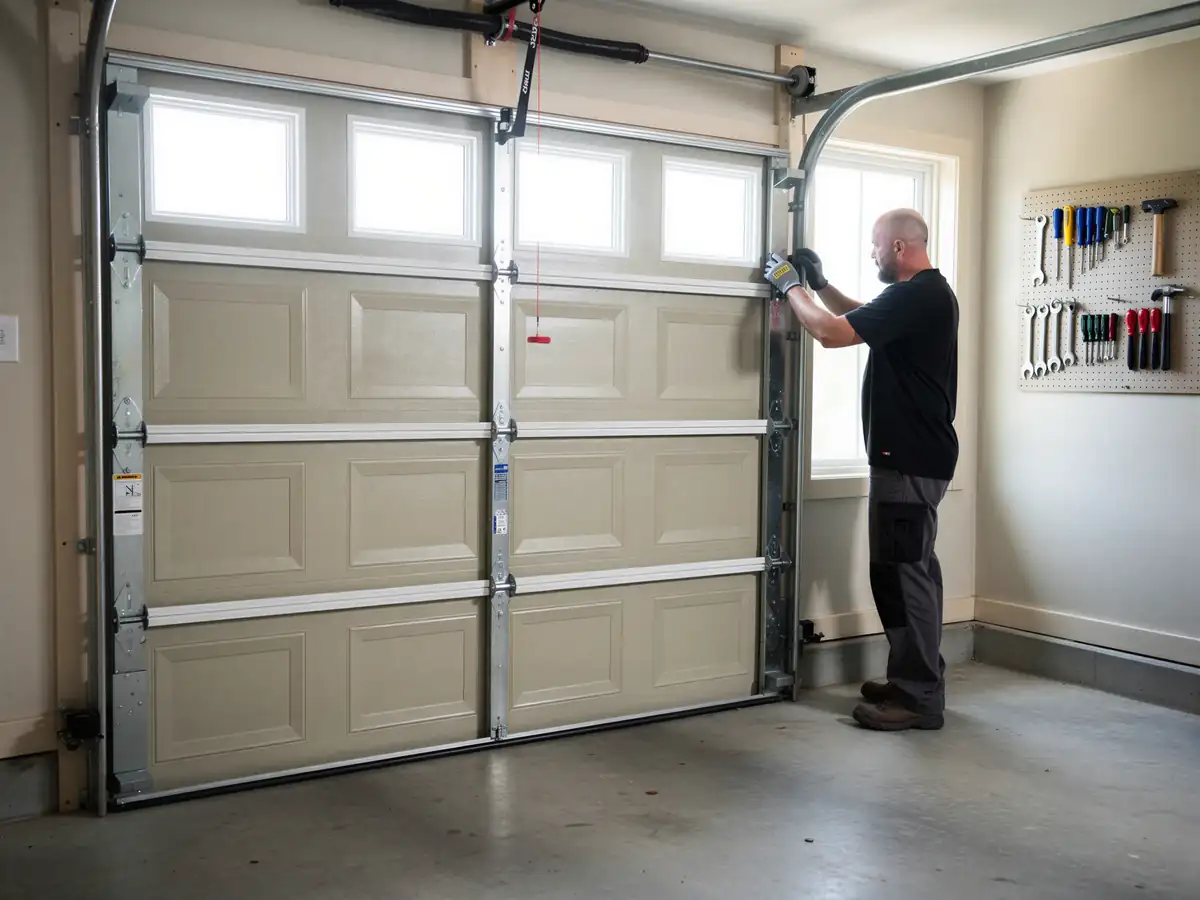
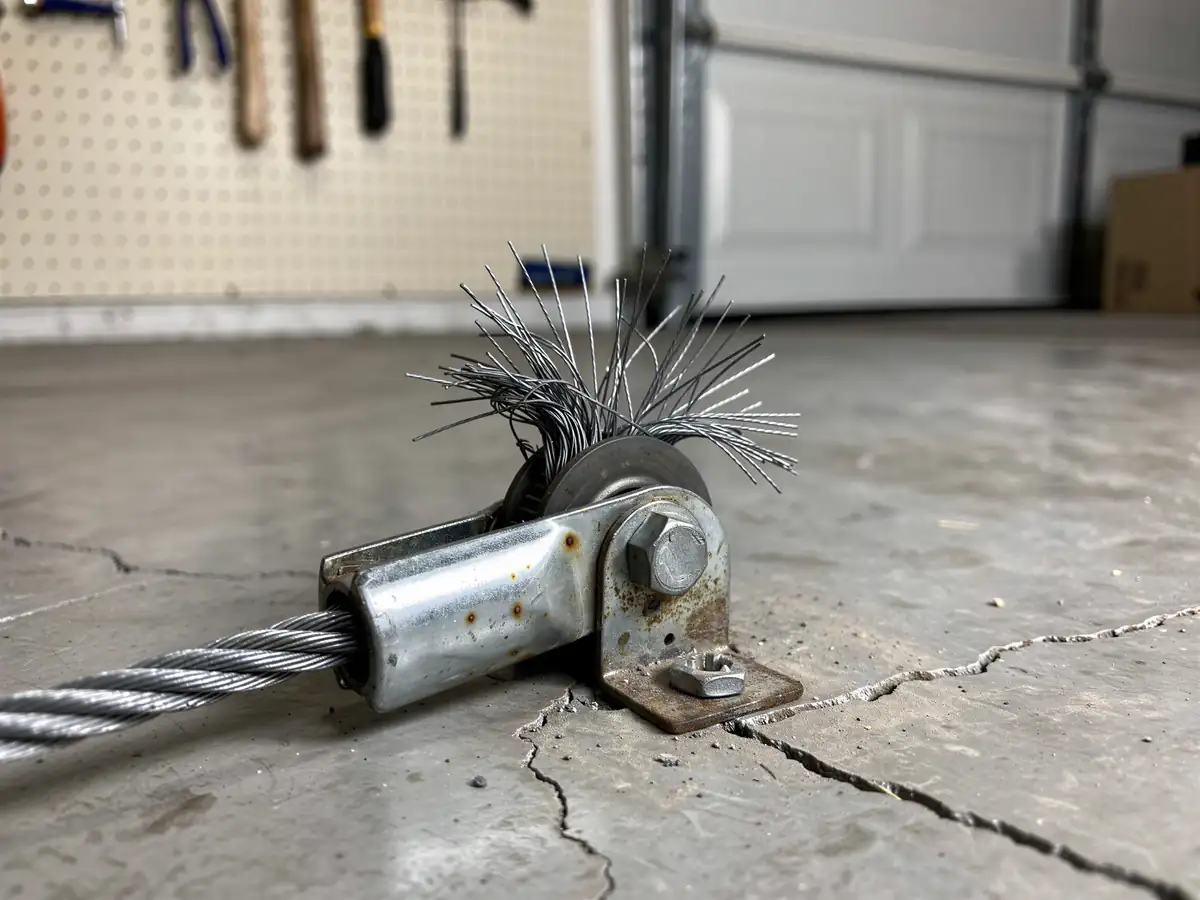
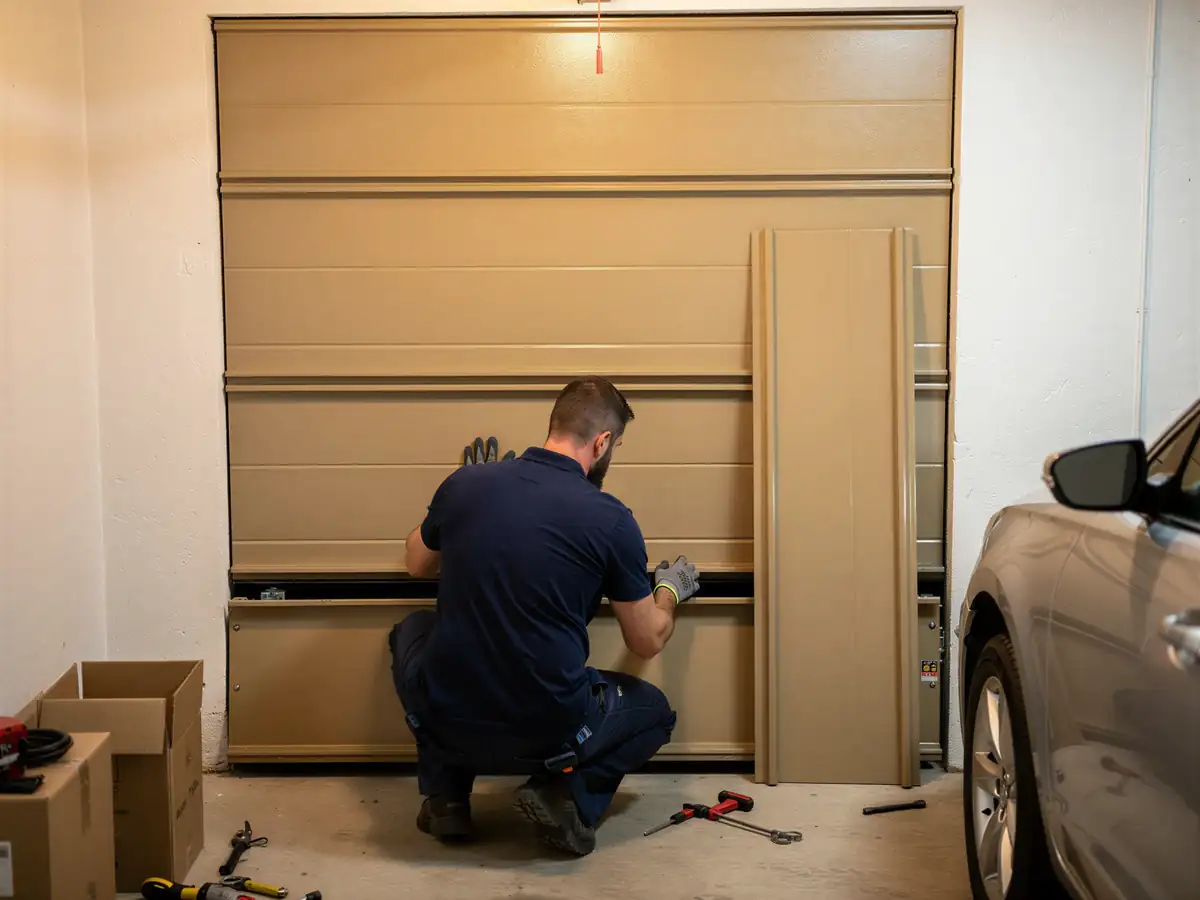
Here's the actual decision point: a door's structural frame and the opener driving it rarely fail at the same time, and that mismatch is what makes 'worth fixing' hard to answer in general terms. In homes from the 1955-2004 range, we regularly find original wood or early steel doors still square and sound, paired with openers that have cycled past their reasonable service life. In that case, fixing is often just a new opener on an old, good door. The flip side is a door with a warped panel or bent track, something that happens often enough on older sectional doors once a cable frays, where the frame itself has given out even though the opener's newer. No amount of adjustment saves a bent track. One honest limitation here: once a torsion spring has been wound and unwound through enough winters that the shaft shows pitting, we won't re-tension it, because the failure risk isn't worth the shortcut, and we'll tell you that on the spot rather than quote around it.