Garage Door Repair Built Around Farmington's Housing Stock
Farmington homes mostly date to 1955-2004, median 1983, with cold-climate wear on springs and openers. Here's what that housing stock actually means for repairs.
Most homeowners here assume their garage door problem is the same one their neighbor in some other suburb had, and they follow the same fix. It usually doesn't work, because Farmington's housing stock isn't generic. Across the 18 named areas that make up this service territory, the bulk of homes went up between 1955 and 2004, with the median build year sitting at 1983. That means most doors and openers in town are mid-80s to 90s vintage hardware, or replacements installed on original framing from that era. The common mistake is treating a worn torsion spring or a noisy chain-drive opener as an isolated part failure instead of what it usually is: age catching up with a whole system that was installed as a matched set thirty-plus years ago. Swap one piece without checking the rest - the track alignment, the drum, the cable - and you're back out here in six months. We also see people assume a louder opener means a bad motor, when on houses from this build era it's often just the original chain drive doing exactly what it was built to do, loudly. The fix isn't always a new motor. Sometimes it's a different kind of drive entirely.
How Local Conditions Play In
Farmington sits in a cold, moderate climate band, and that matters more for garage doors than people think. Steel contracts in cold weather, and on a door with original 1980s or 90s hardware, that contraction puts extra load on a spring that's already lost tension over a few decades of winters. We see more spring failures in the cold months here, not because the cold breaks springs outright, but because it's the final push on hardware that was already near the end of its life. Nylon rollers from that era get brittle in the cold too, and brittle rollers bind in the track instead of rolling, which is a different repair than a roller that's just worn smooth. Weatherstripping on doors from this build period also wasn't made to today's standard, so a lot of the drafts people notice in January aren't an insulation problem, they're a seal that's thirty years old and was never going to last that long in this climate.
The Problem
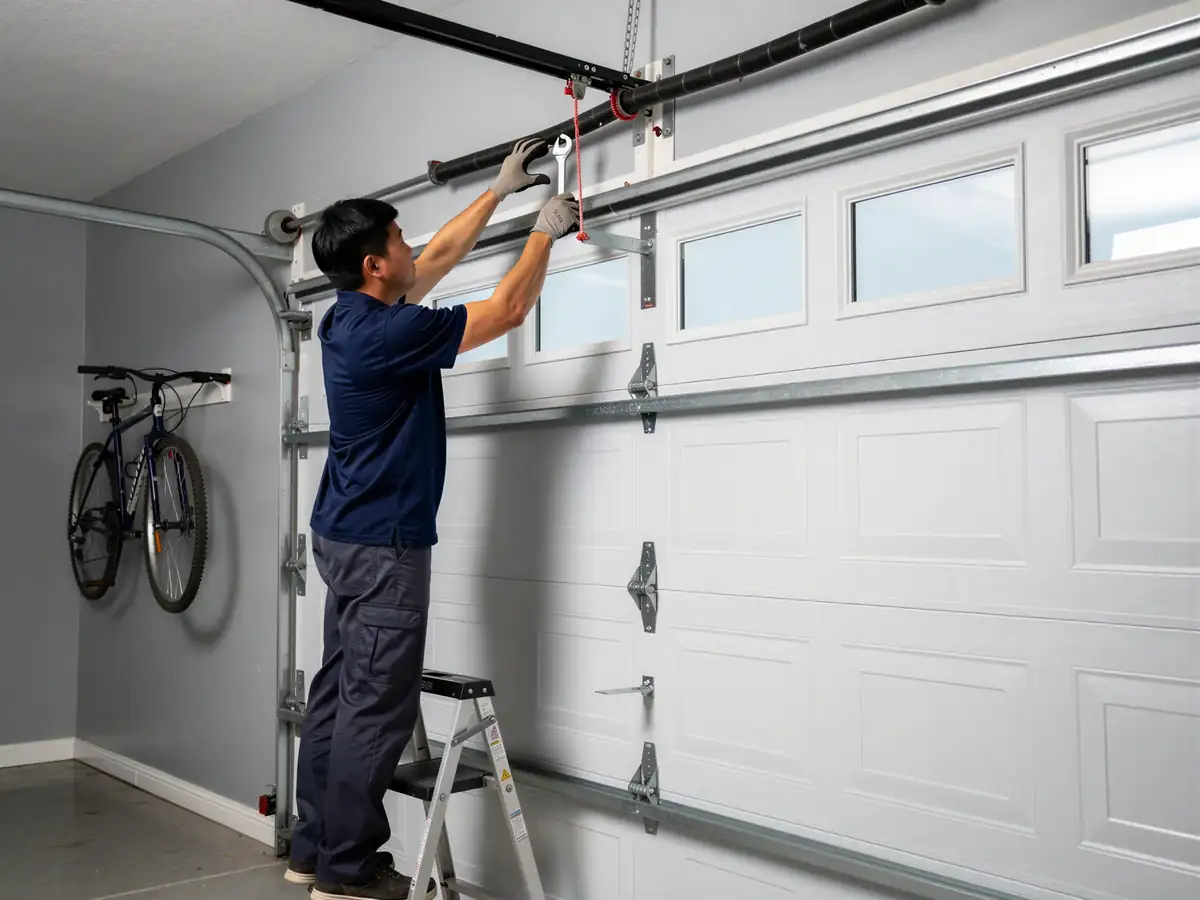
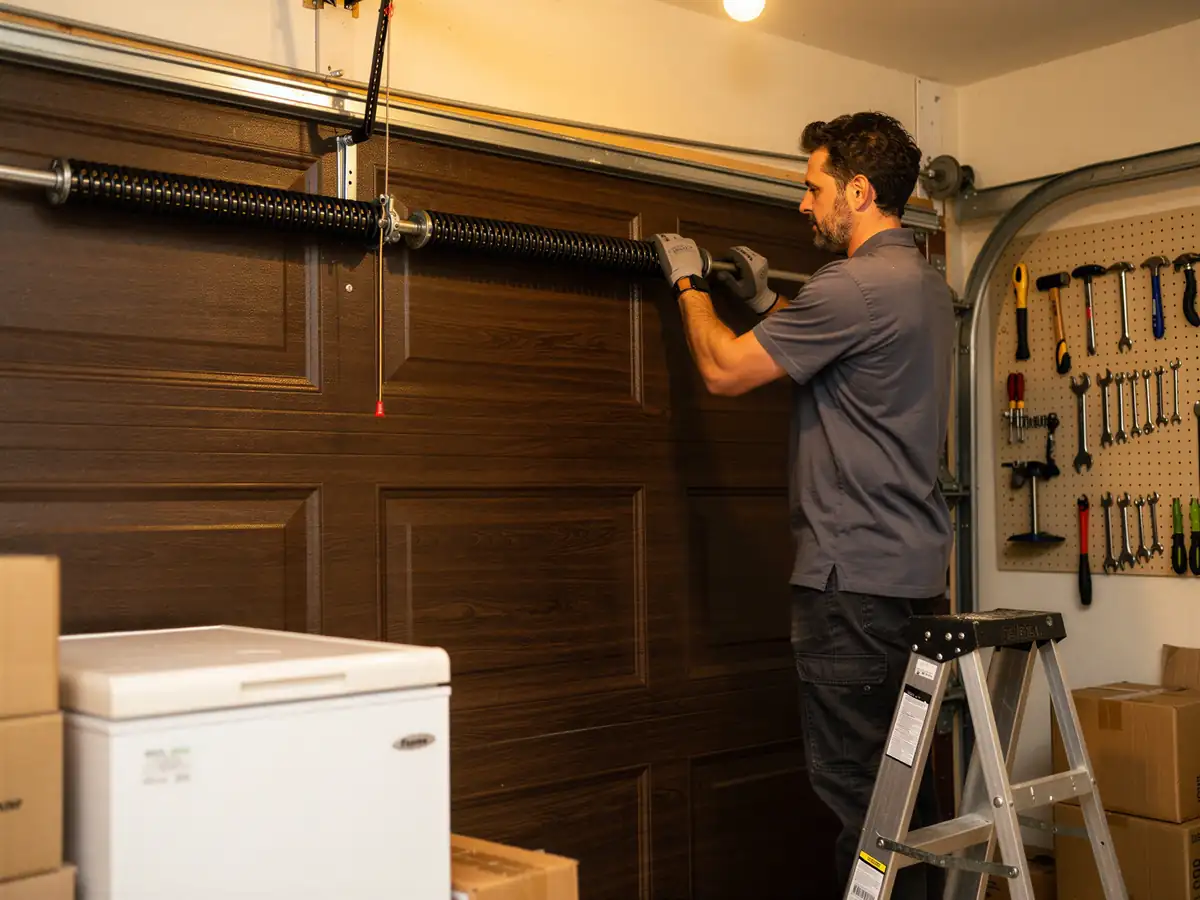
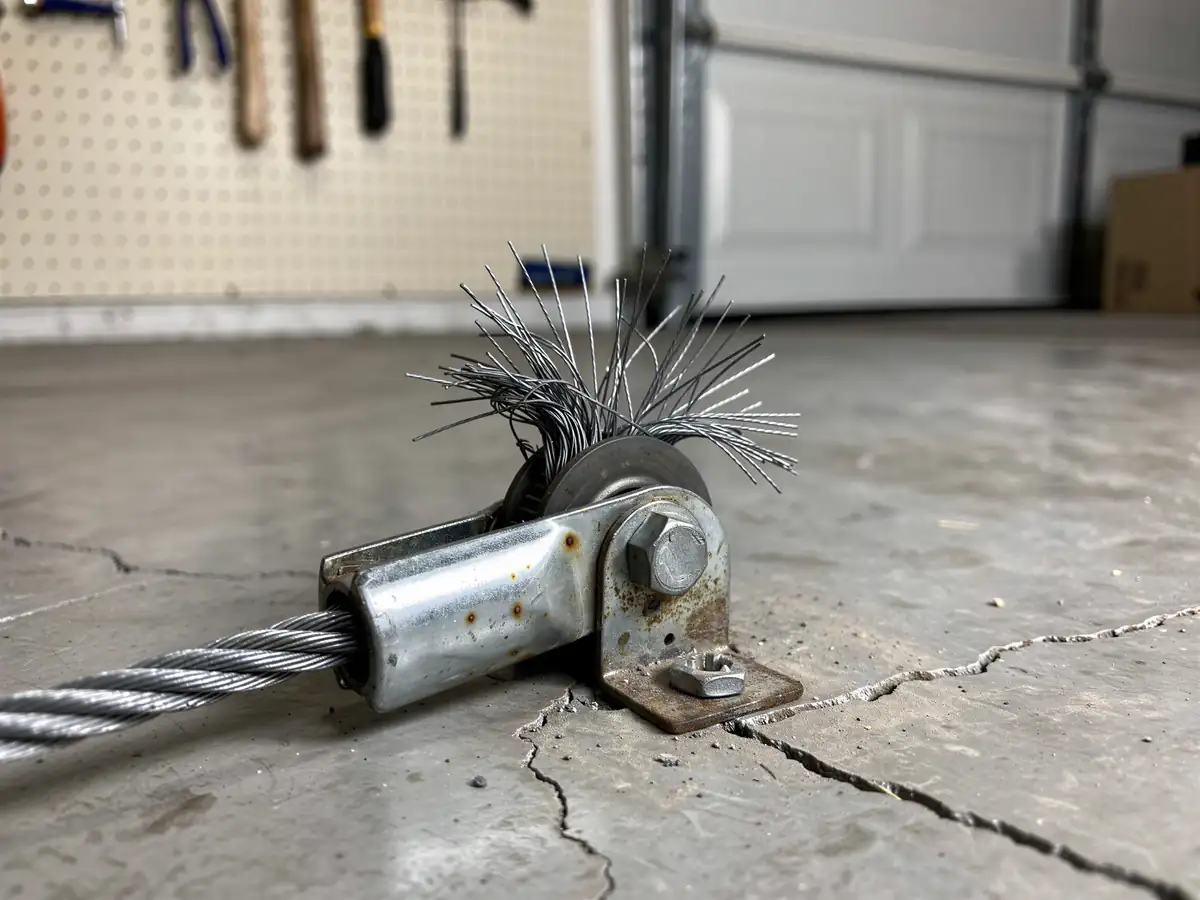
Put the housing age and the climate together and you get a specific, recurring job: torsion springs and rollers original or near-original to a house built in the 1983-ish window, failing in cold weather because they were already marginal going into winter. It's not a dramatic failure most of the time - it's a door that gets heavier to lift by hand each week until one morning it won't move, or a spring that lets go with a bang on a cold morning. The honest limitation here: if your door and opener are both original to a house from this era, a spring swap alone sometimes just buys you a year before the next part goes. We'll tell you when that's the case instead of running the bill up part by part. With a median household income of $93,077 across this area and a mix of owner-occupied homes built in that same window, most people here are deciding between a targeted repair and a full opener or door replacement - and that decision should be based on what's actually failing, not just what's loudest.
The Cost of This Job
We don't have a flat number to quote you here, and we're not going to make one up. What we can tell you is what drives the cost on a typical Farmington job: whether it's a spring-only repair on a door that's otherwise sound, versus a spring plus rollers plus a cable that's frayed from the same age and cold-weather wear. Homes built in the 1955-2004 window, especially ones clustered in the 1980s-90s range, tend to need the second kind of job more often than people expect, because the parts age together. Across the service area - with 41,589 households and 21,947 owner-occupied houses - we see this pattern repeat: one visible symptom, two or three worn parts underneath it. Ask for the breakdown before you approve the work, and ask whether a single part swap is a real fix or a stopgap on a door that's due for more.
How it works
From “it’s stuck” to “it’s fixed”
1
Tell us what’s wrong
Describe the symptom - won’t open, loud bang, opener runs but the door won’t move.
2
On-site diagnosis
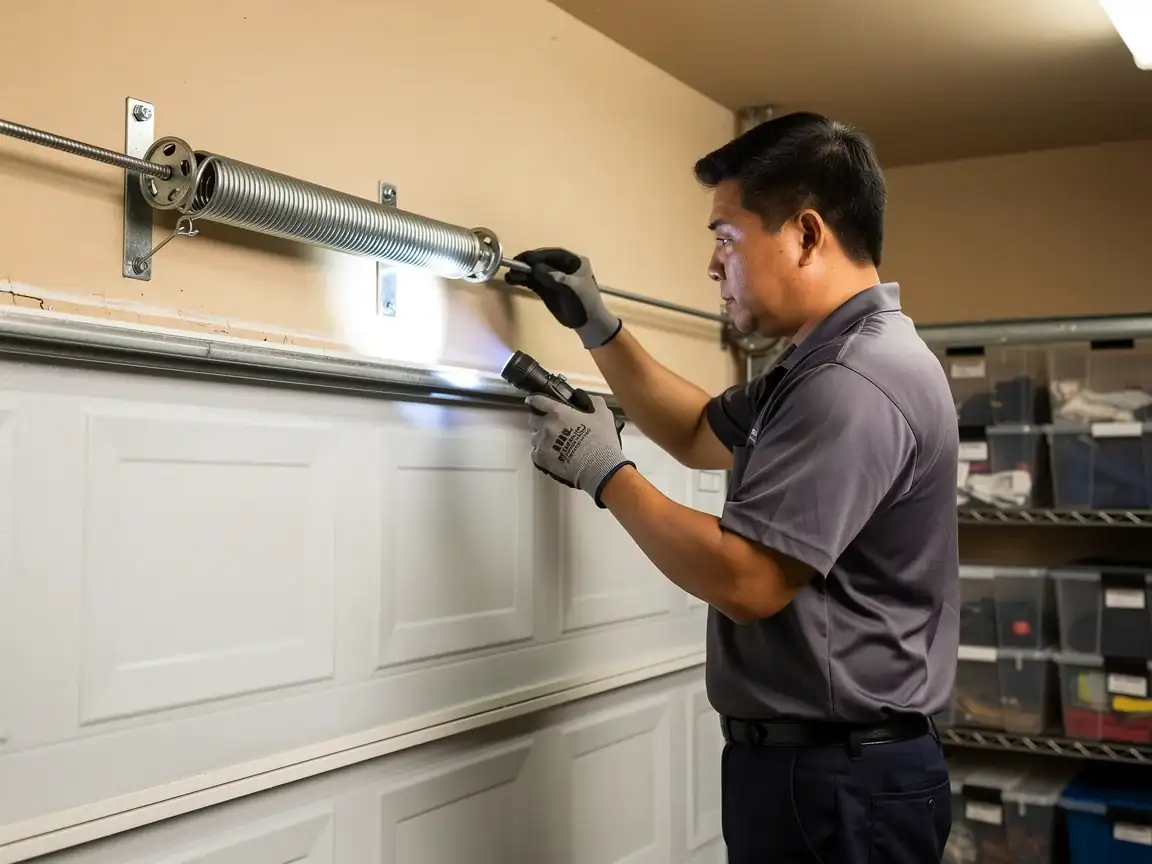
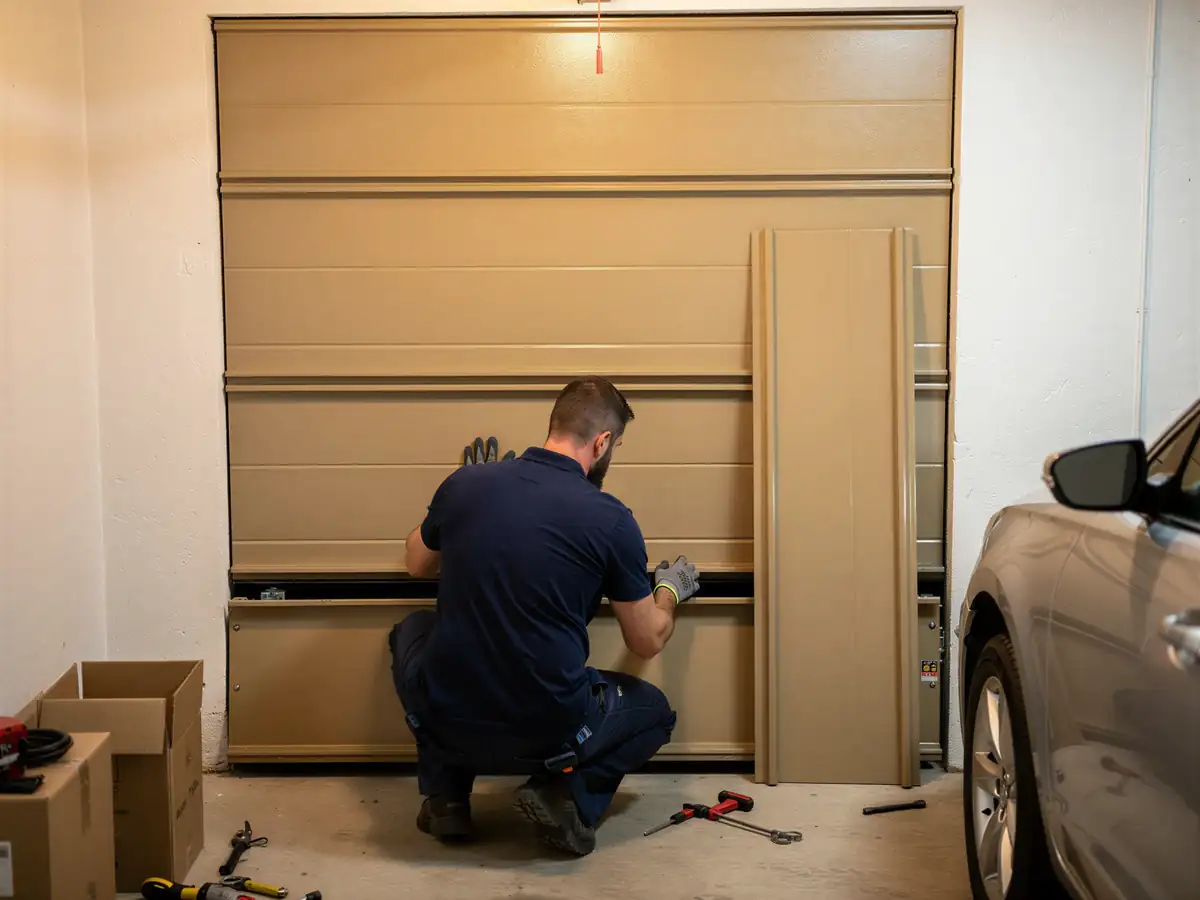
A technician tests the door under power and by hand and finds what actually failed.
3
Clear, up-front plan
You get the fix that’s needed and what drives the cost - before any work starts.
4
Repaired & tested
The repair is done, the door is set true and tested, and the work area left clean.
Not sure which repair your door needs in Farmington, MN? Describe what it’s doing - every job starts with a diagnosis.
Why do garage door springs seem to fail more in winter here?
Steel springs lose tension over time, and cold weather adds extra load right when they're already weakest. In this cold, moderate climate band, a spring that's marginal in fall often lets go on a cold morning. It's rarely the cold alone - it's the cold finishing off hardware that's near the end of its service life.
My house was built in the 1980s - is my opener original?
It's possible. Most homes in this area were built between 1955 and 2004, with a median around 1983, so a lot of openers in town are original chain-drive units from that window or early replacements. If yours is loud and has never been swapped, it's worth having it looked at rather than assuming it's fine.
Is it worth replacing just the spring, or should I replace more?
Depends on what else on the door is the same age as the spring. On a lot of homes built in the 1980s-90s stock common here, the rollers and cables are original too, and they wear at a similar rate. We'll check those before quoting a spring-only fix so you're not back out here in a few months.
Ready to get your garage door sorted?
Tell us what it’s doing and where you are in Farmington - we’ll take it from there.