Why Farmington's Garage Door Springs Fail When It Gets Cold
Farmington homes built mostly 1955-2004 carry aging torsion springs, and this area's cold winters are exactly when old steel gives out without warning.
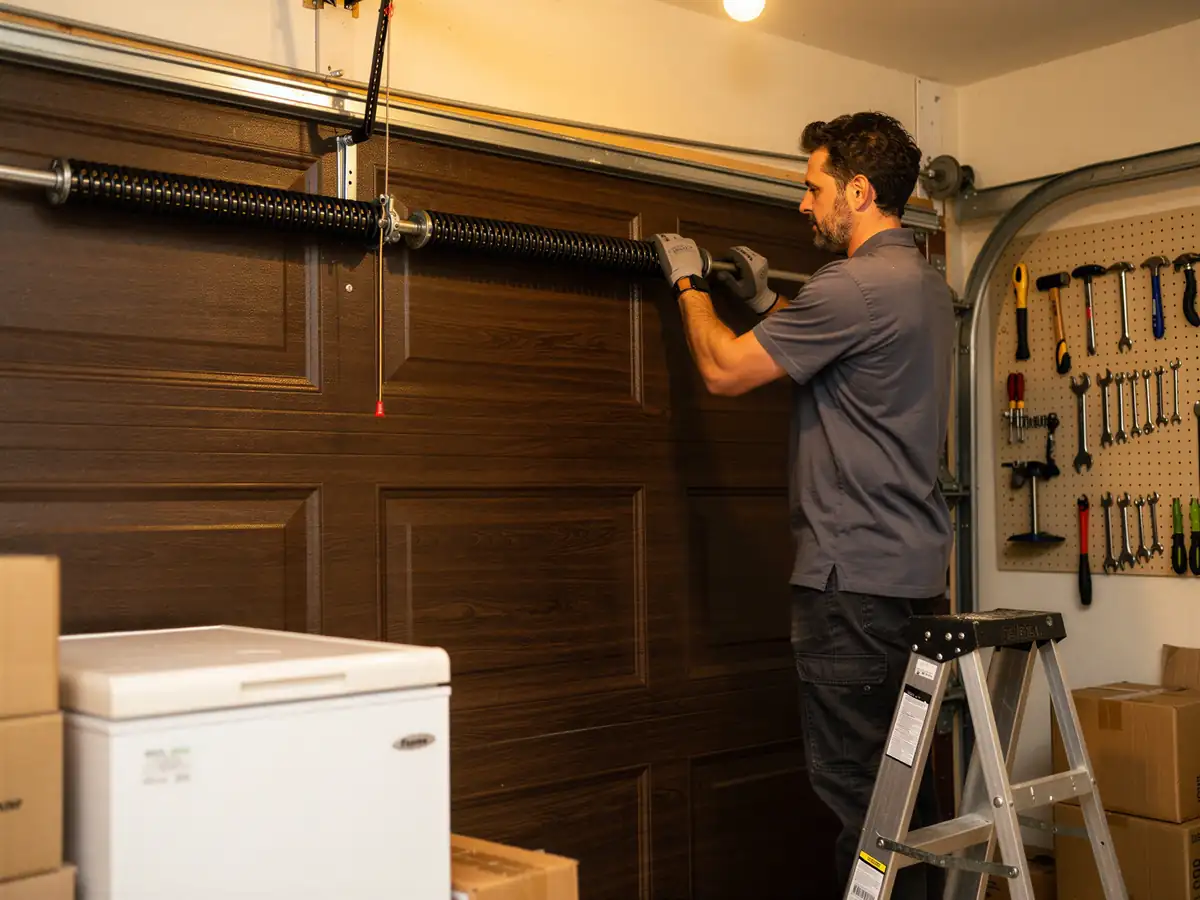
Most homeowners here think a noisy spring means it needs oil. It usually means it's at the end of its life. Housing across this service area was built mostly between 1955 and 2004, with a median year of 1983, and across the 18 named areas that make up most of the local stock, you're looking at homes that are now 40 to 70 years old. That means a lot of original torsion springs, or springs replaced once decades ago, are sitting at or past their cycle count right now. People wait for a squeal or a jerky lift before they call, but a spring doesn't usually warn you. It holds tension fine for years and then one cold morning it doesn't. Waiting for a sound is waiting for the wrong signal. The better habit is knowing roughly how old your spring is relative to your house, since in a neighborhood built in the 1980s, that spring is very likely original equipment and well past the point anyone should be trusting it to hold a 150-pound door.
How Local Conditions Play In
This area sits in a cold climate band, and cold steel behaves differently than warm steel. A torsion spring loses a measurable amount of tension as the metal contracts, and on a morning when the garage has sat unheated all night, that spring is carrying less margin than it was built with. Pair that with a spring that's already 20 or 30 years into a house built in the 1983 median range, and you've got the two things that actually cause a snap: age and cold, together. It's not that cold breaks a healthy spring. It's that cold is what exposes a spring that was already near its limit. That's why the calls cluster on the coldest mornings of the season rather than spreading evenly through the year. If your house falls into that main build era for this area, the spring under strain on a cold start is very likely the original one, not a newer replacement, because most of this stock hasn't needed a second spring yet.
The Problem
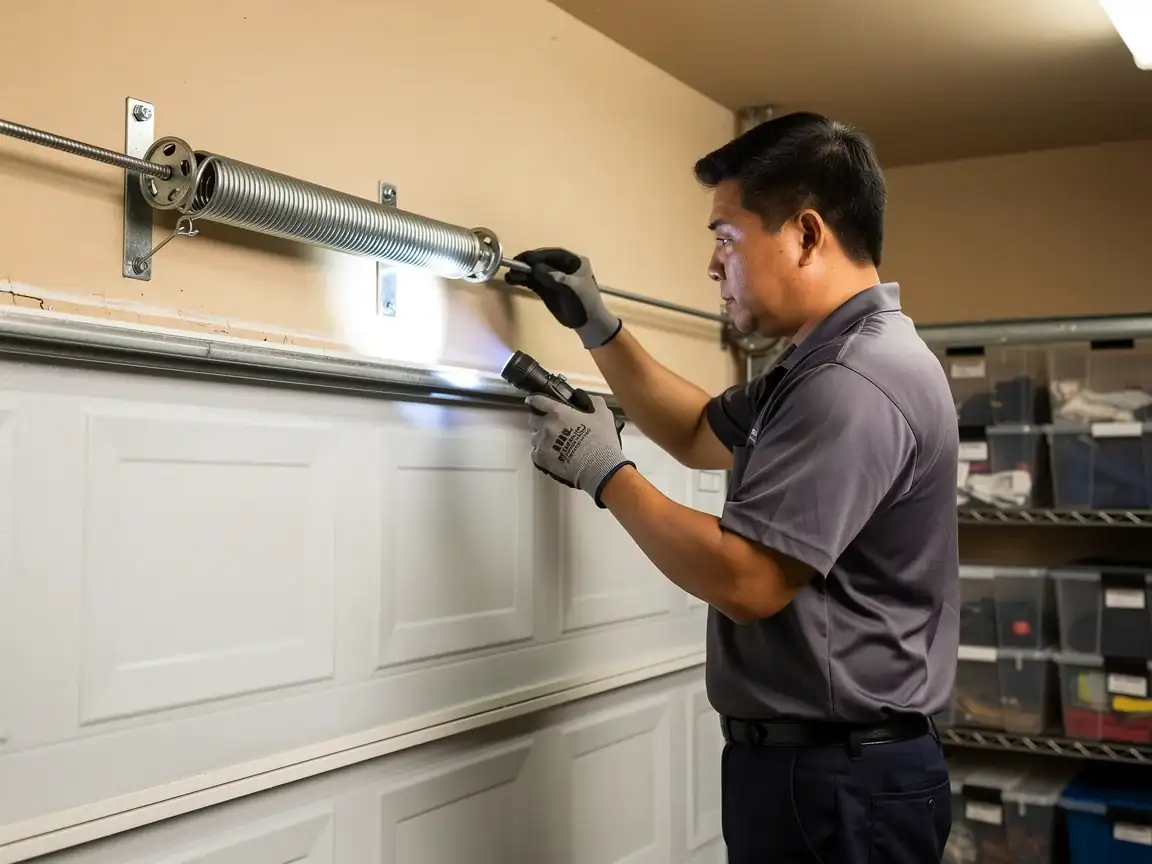
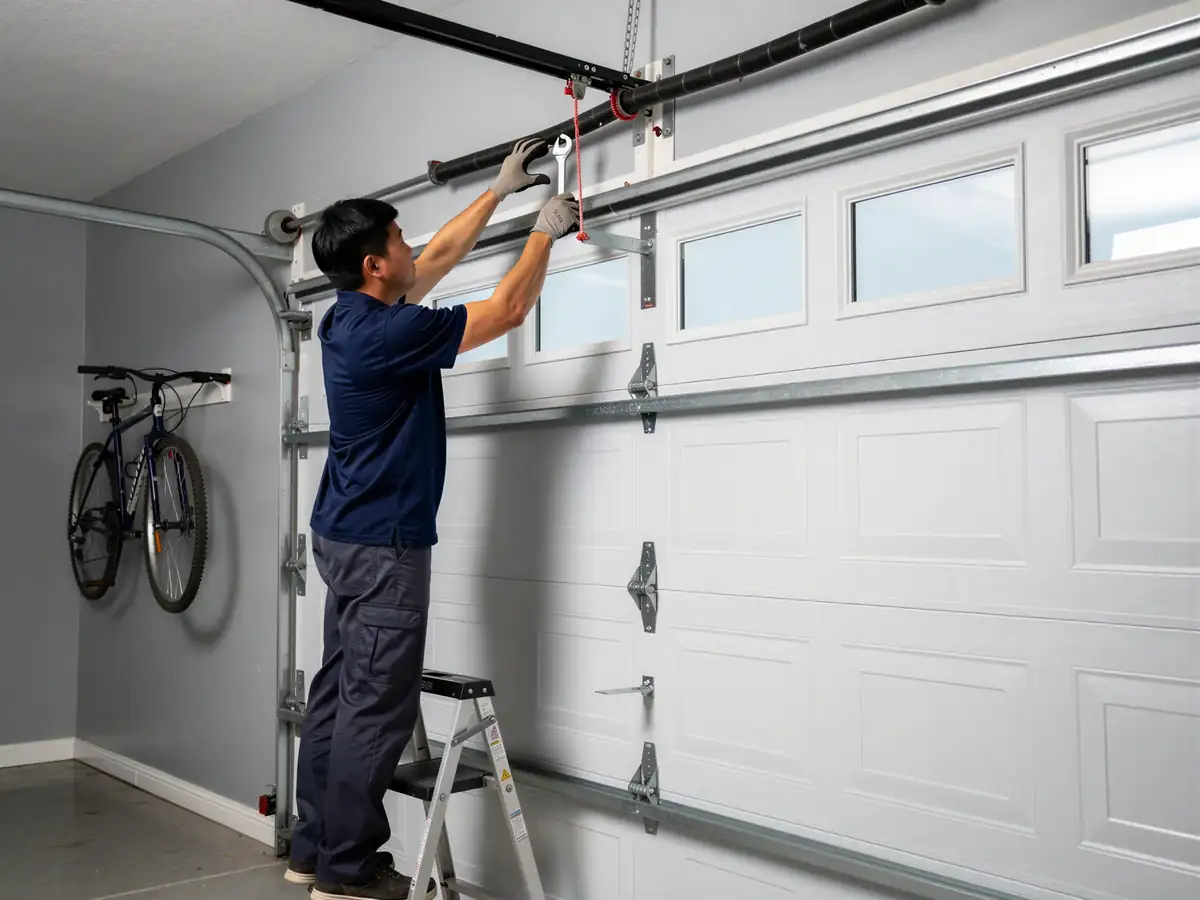
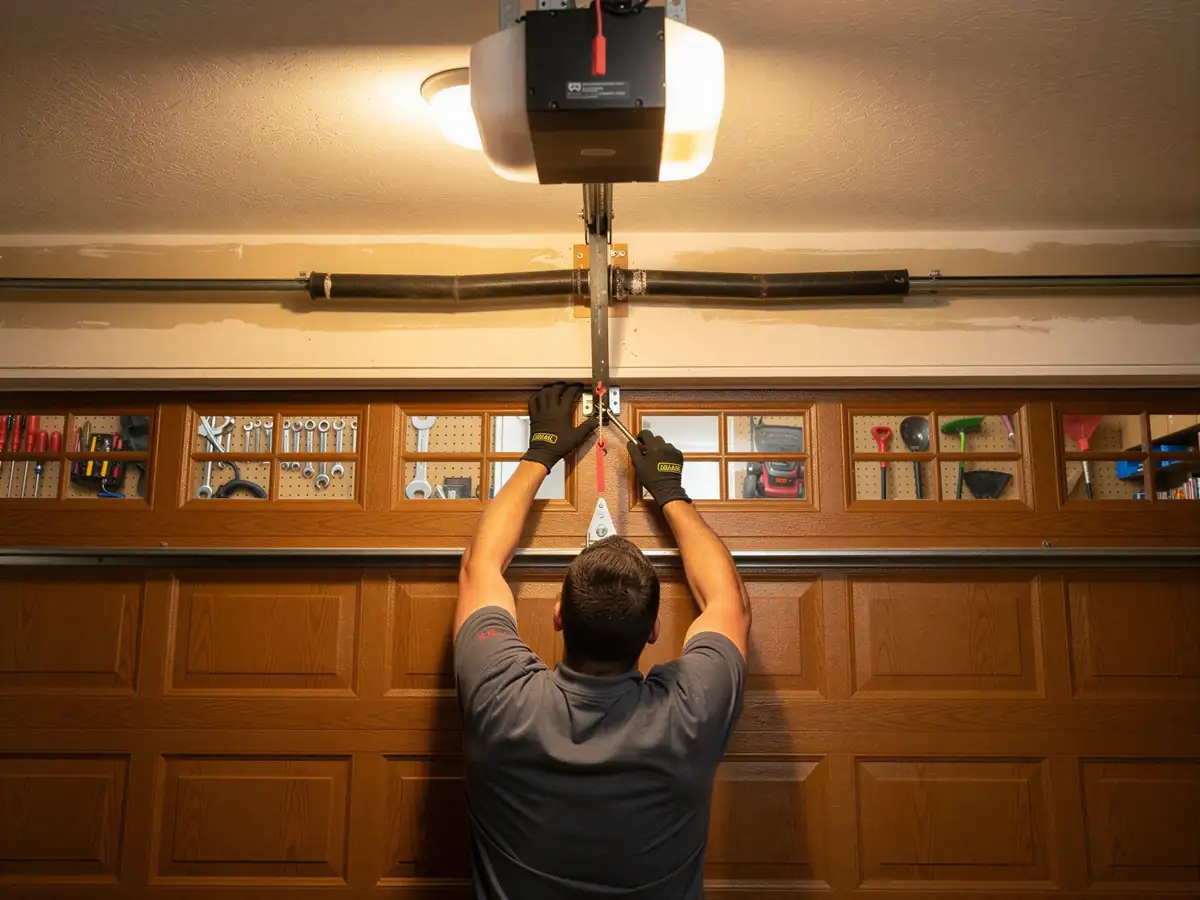
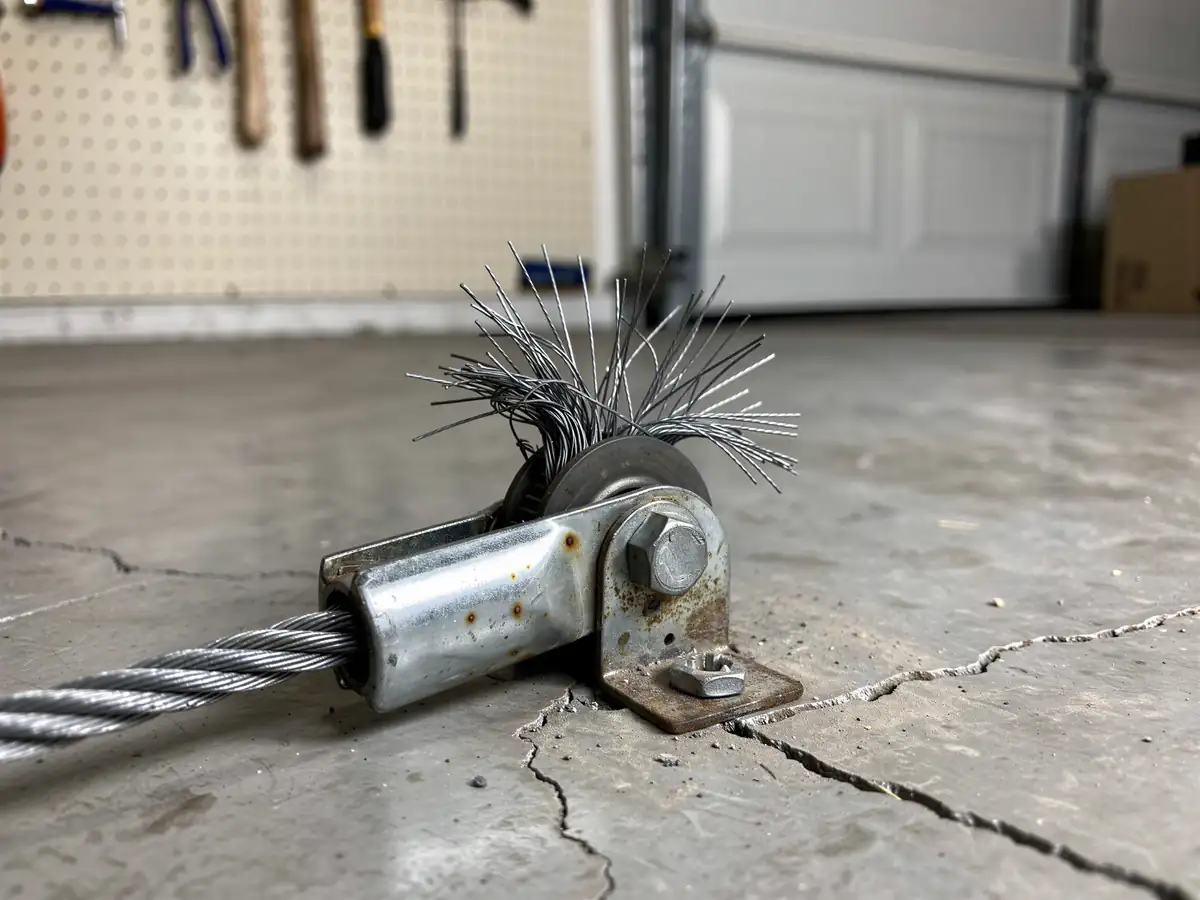
When a torsion spring lets go, the door doesn't ease down, it drops. On a double door that's a lot of uncontrolled weight landing on cables, rollers, and whatever's under it at the time. If the spring was already weakened by cold and age, the break is often sudden rather than a slow fray, so there's rarely a warning sound right before it happens. The bigger risk in homes from this area's main build era is that the hardware around the spring, the end bearings, the stationary cone, the cable drums, is also original. A spring failure on older hardware tends to take something else with it, which is why a job that starts as "the spring broke" often turns into a look at the whole torsion assembly rather than a single part swap.
The Cost of This Job
I don't have a set price to quote here, and giving you a number without seeing the door, the spring size, and what else got stressed when it broke would be a guess, not a quote. What I can tell you honestly is that a spring job on a house from this area's typical build era is rarely just the spring. If the hardware is original to a house from the 1980s, there's a decent chance the cable drums or bearings need attention at the same time, and that changes the job. The one thing I won't do is sell you a spring-only fix if the drums are chewed up, because that just sets you up for a second failure within a season. If a door is only a few years from needing full replacement anyway, sometimes the honest call is to put the spring money toward that instead.
How it works
From “it’s stuck” to “it’s fixed”
1
Tell us what’s wrong
Describe the symptom - won’t open, loud bang, opener runs but the door won’t move.
2
On-site diagnosis
A technician tests the door under power and by hand and finds what actually failed.
3
Clear, up-front plan
You get the fix that’s needed and what drives the cost - before any work starts.
4
Repaired & tested
The repair is done, the door is set true and tested, and the work area left clean.
Not sure which repair your door needs in Farmington, MN? Describe what it’s doing - every job starts with a diagnosis.
How do I know if my spring is original to the house?
If your home falls into the main build range for this area, roughly 1955 to 2004 with most clustering around the 1980s, and you haven't had a spring replaced that you know of, it's almost certainly original. There's no inspection sticker on most older torsion springs, so age is usually a matter of matching the house's build year to whether anyone's touched the door since.
Why did my spring break on such a cold morning?
Cold steel holds less tension than warm steel, so a spring that's already old and near the end of its cycle life loses just enough margin on a cold start to finally give. It's the combination of age and temperature, not the cold alone, that causes the sudden failure rather than a gradual one.
Can I just replace the spring and leave the rest alone?
Sometimes, yes. But on older hardware, a spring failure often stresses the cable drums or bearings at the same time, and replacing only the spring on damaged hardware tends to lead to a second failure soon after. It's worth having the whole assembly looked at before deciding.
Ready to get your garage door sorted?
Tell us what it’s doing and where you are in Farmington - we’ll take it from there.