Doing It Yourself
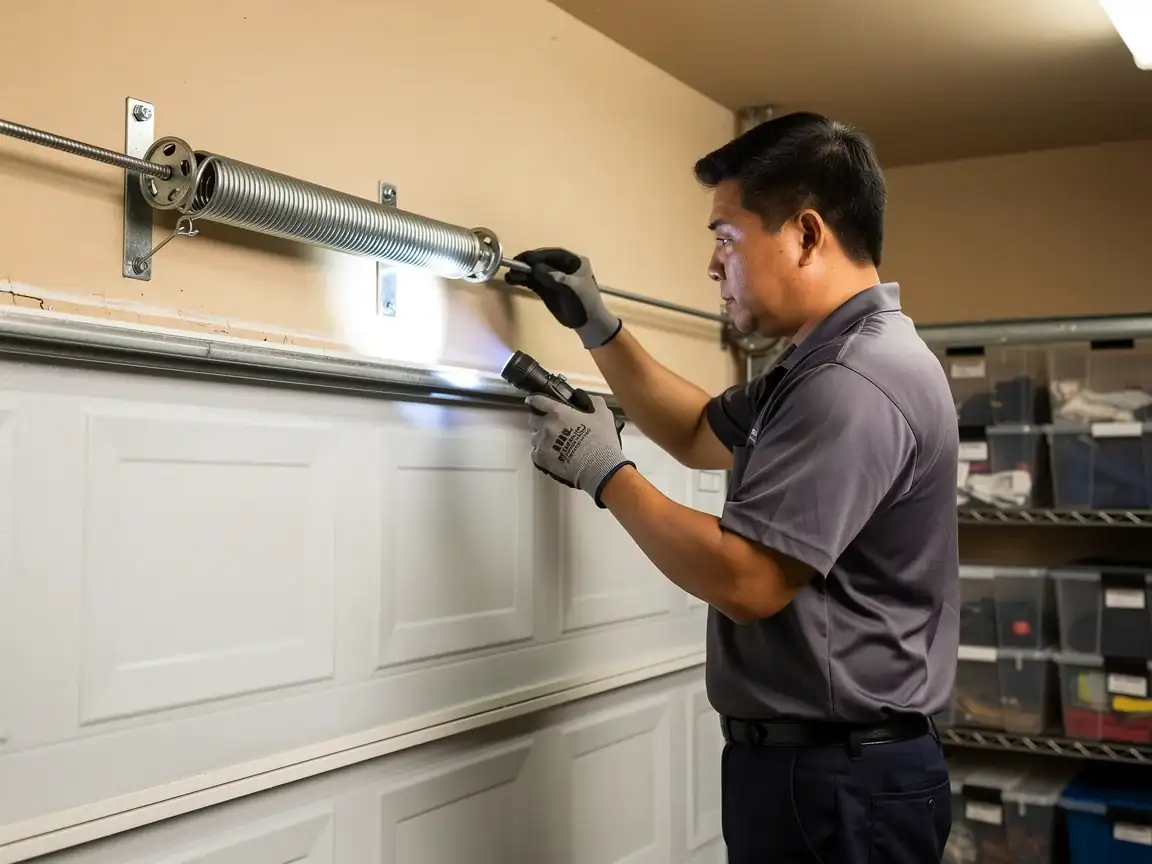
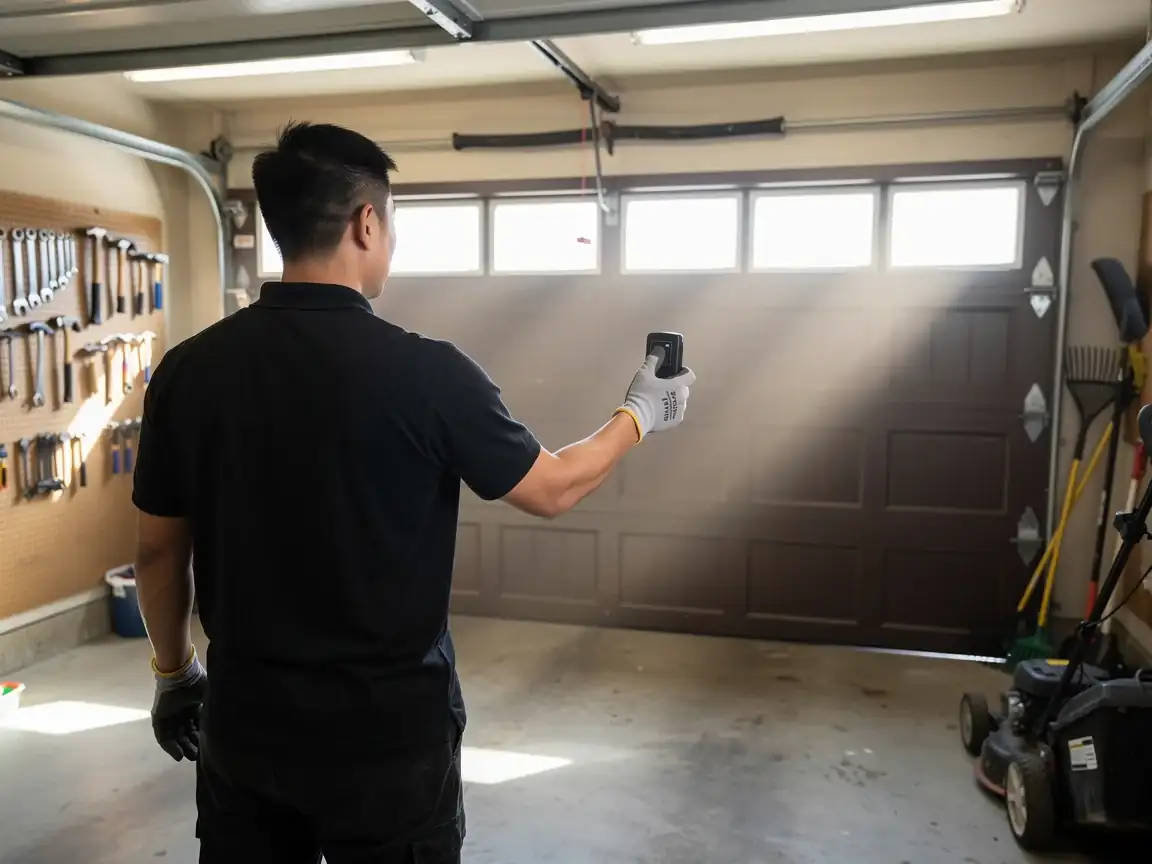
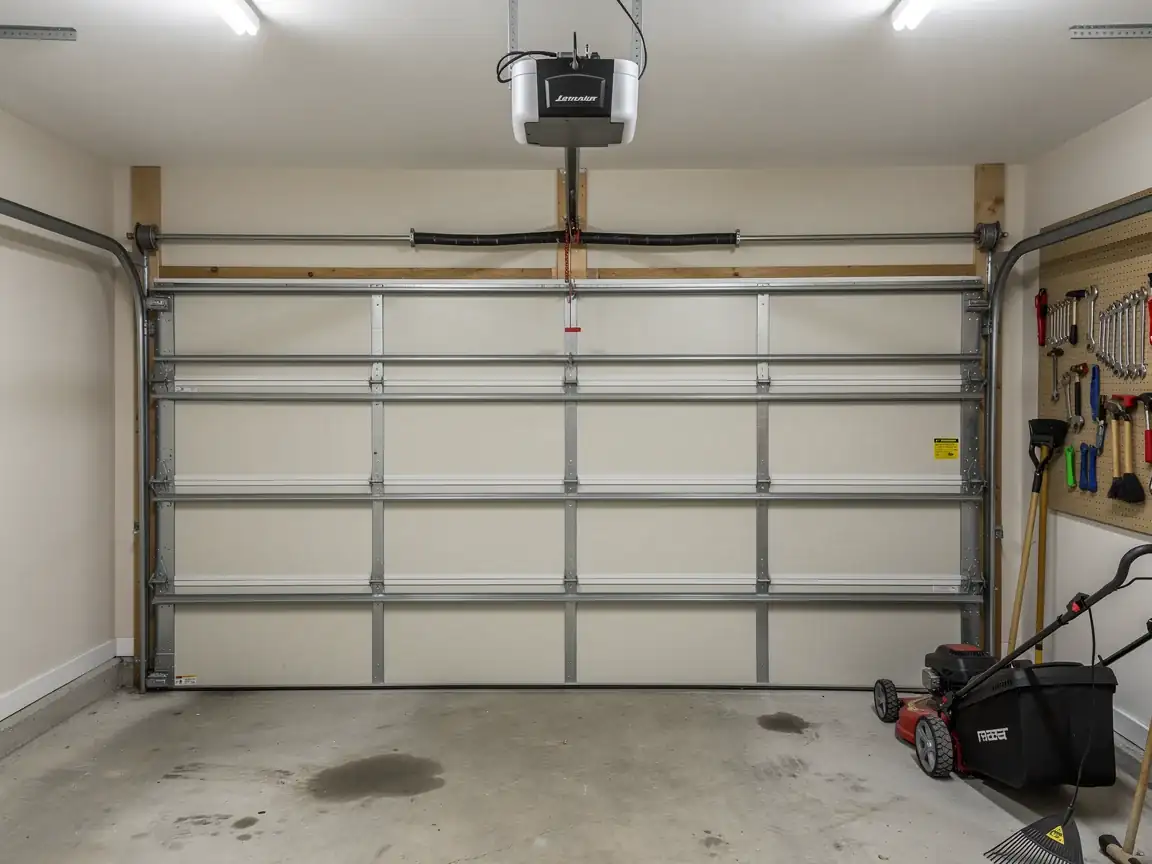
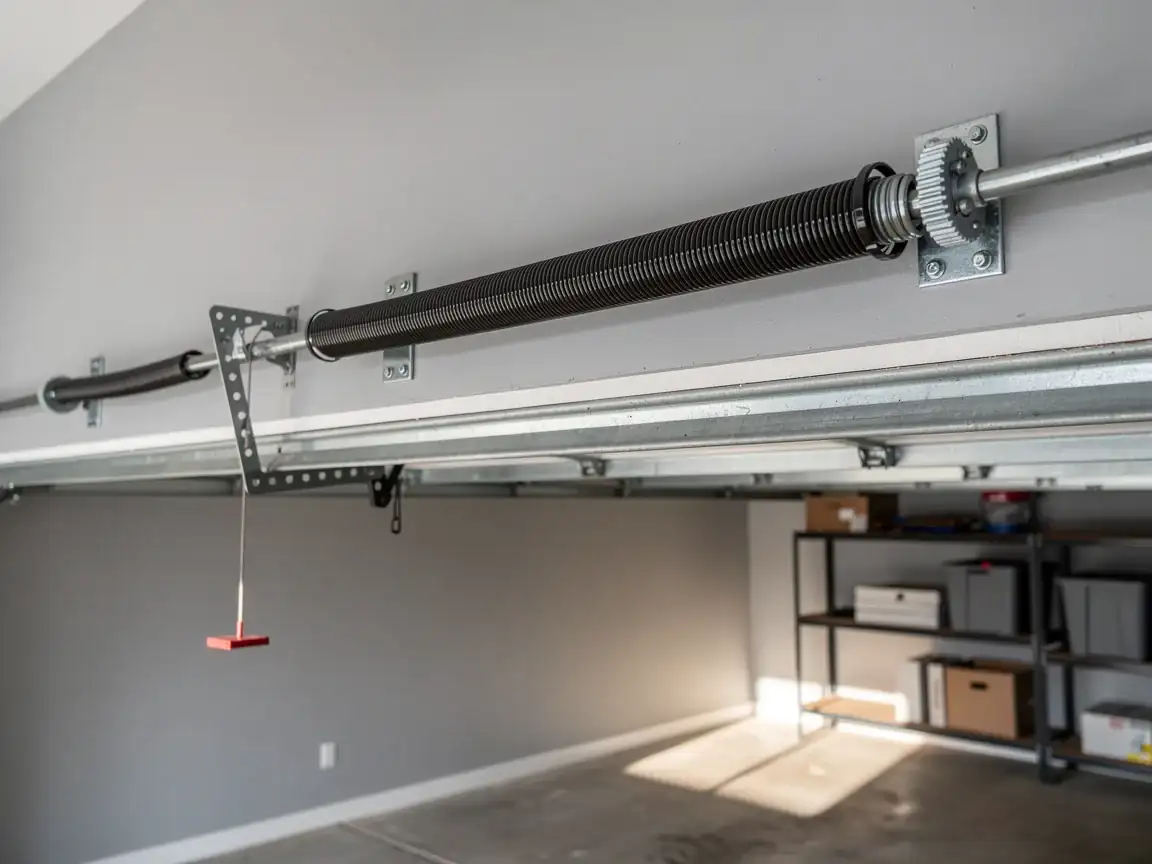
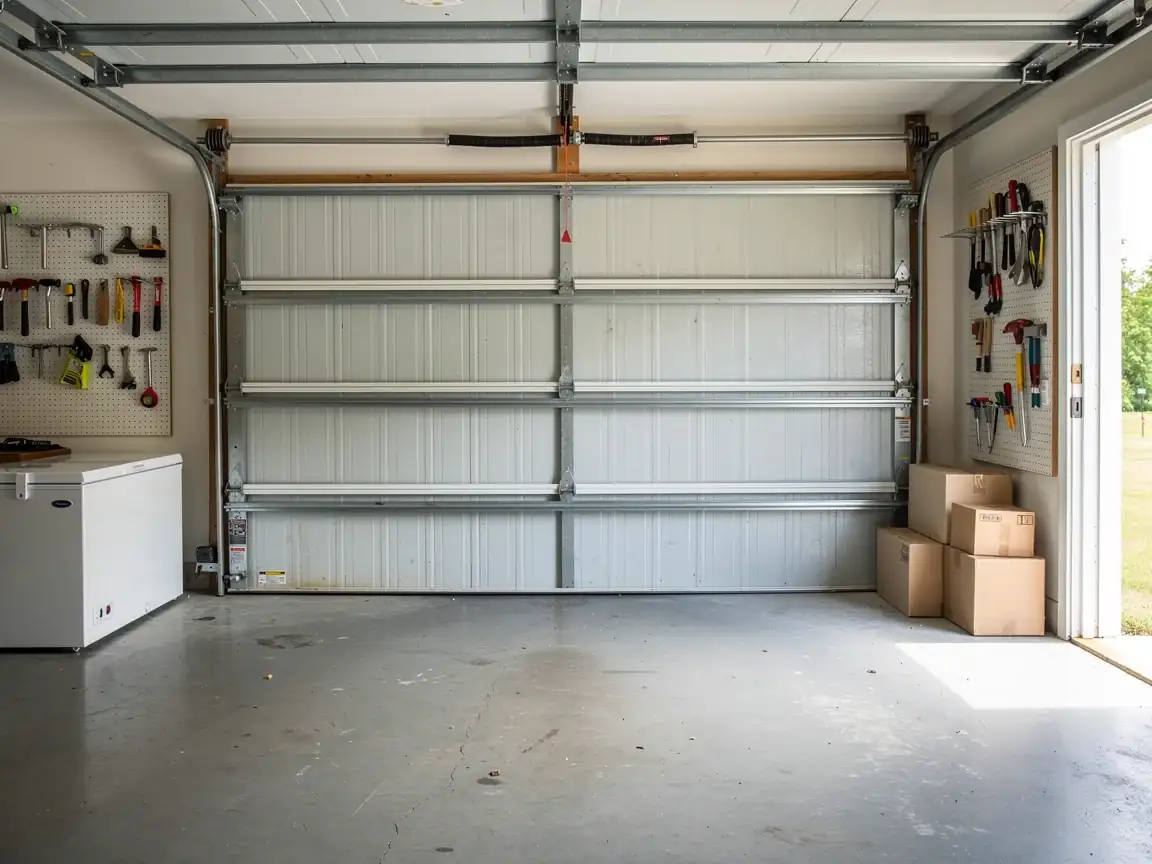
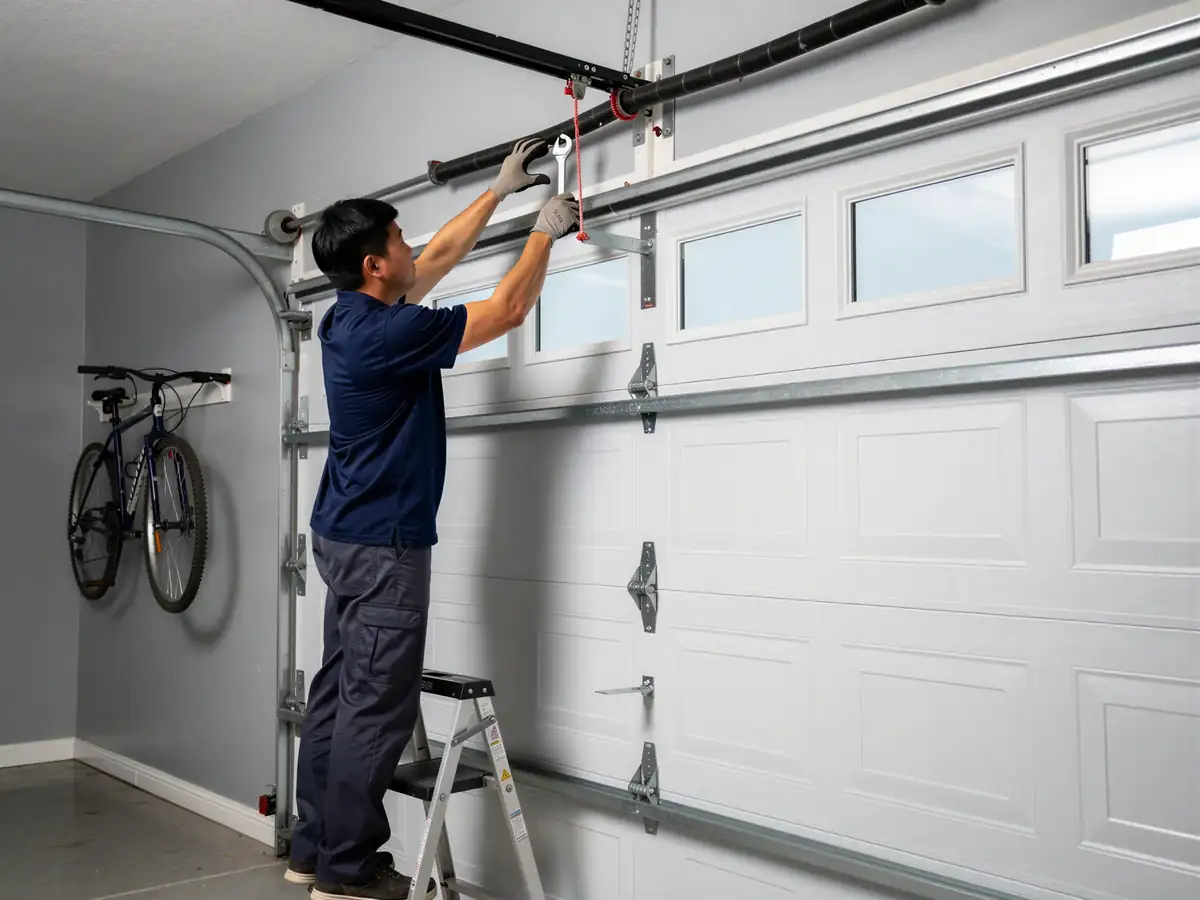
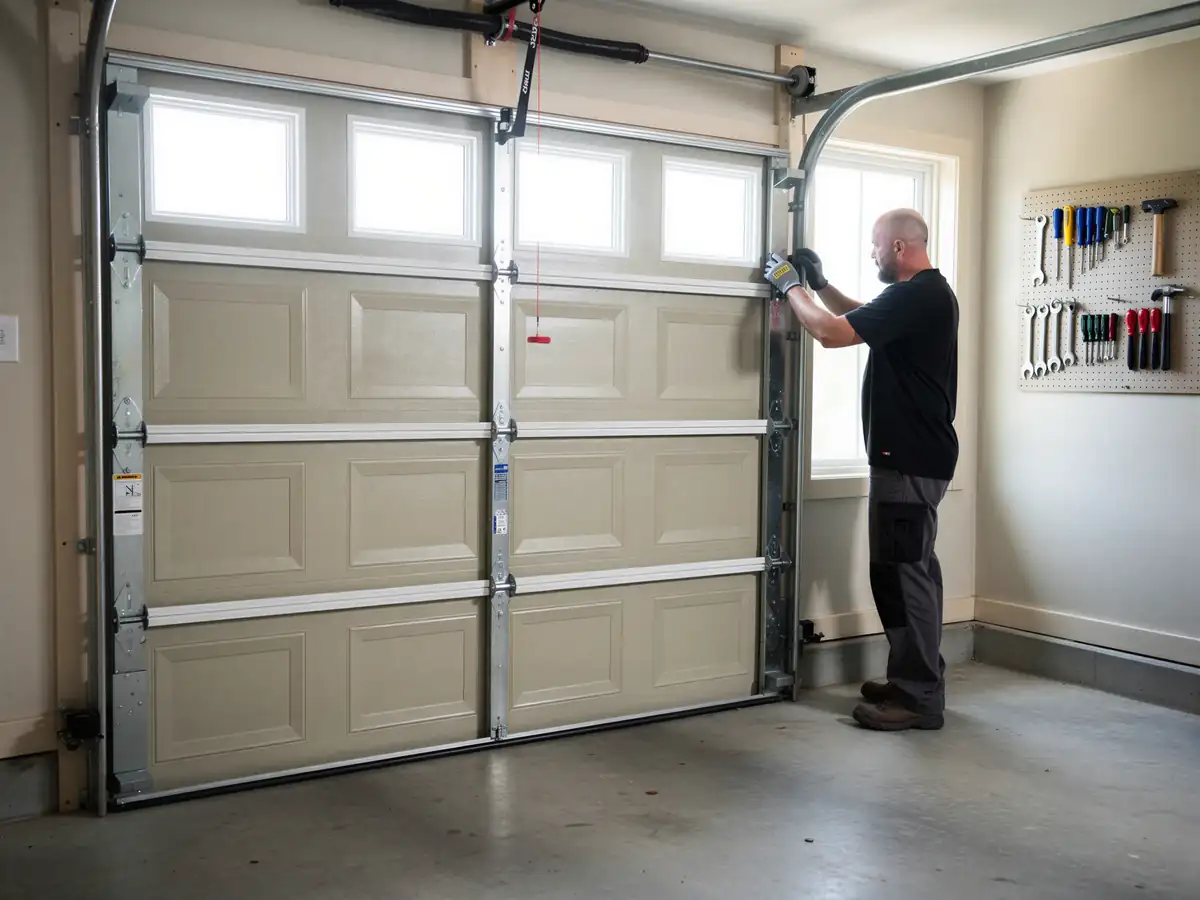
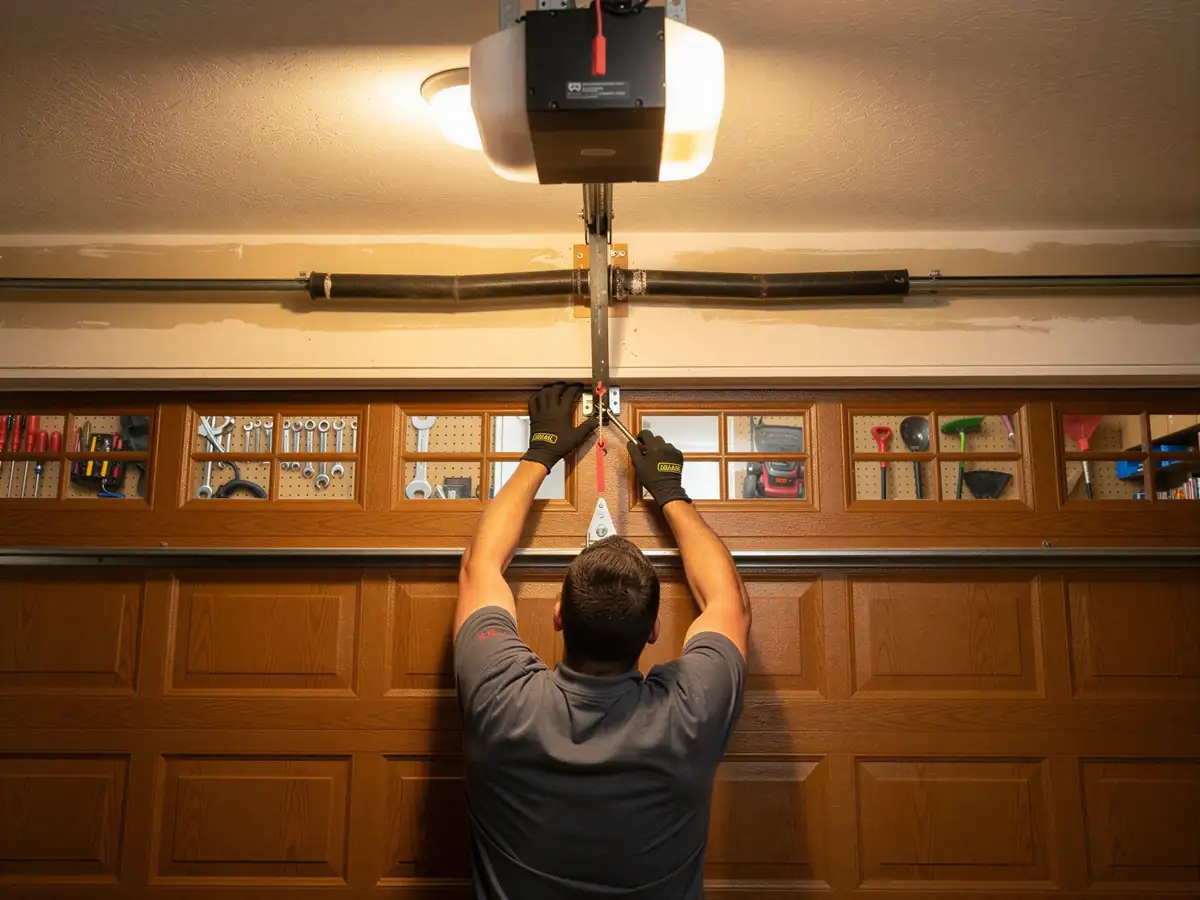
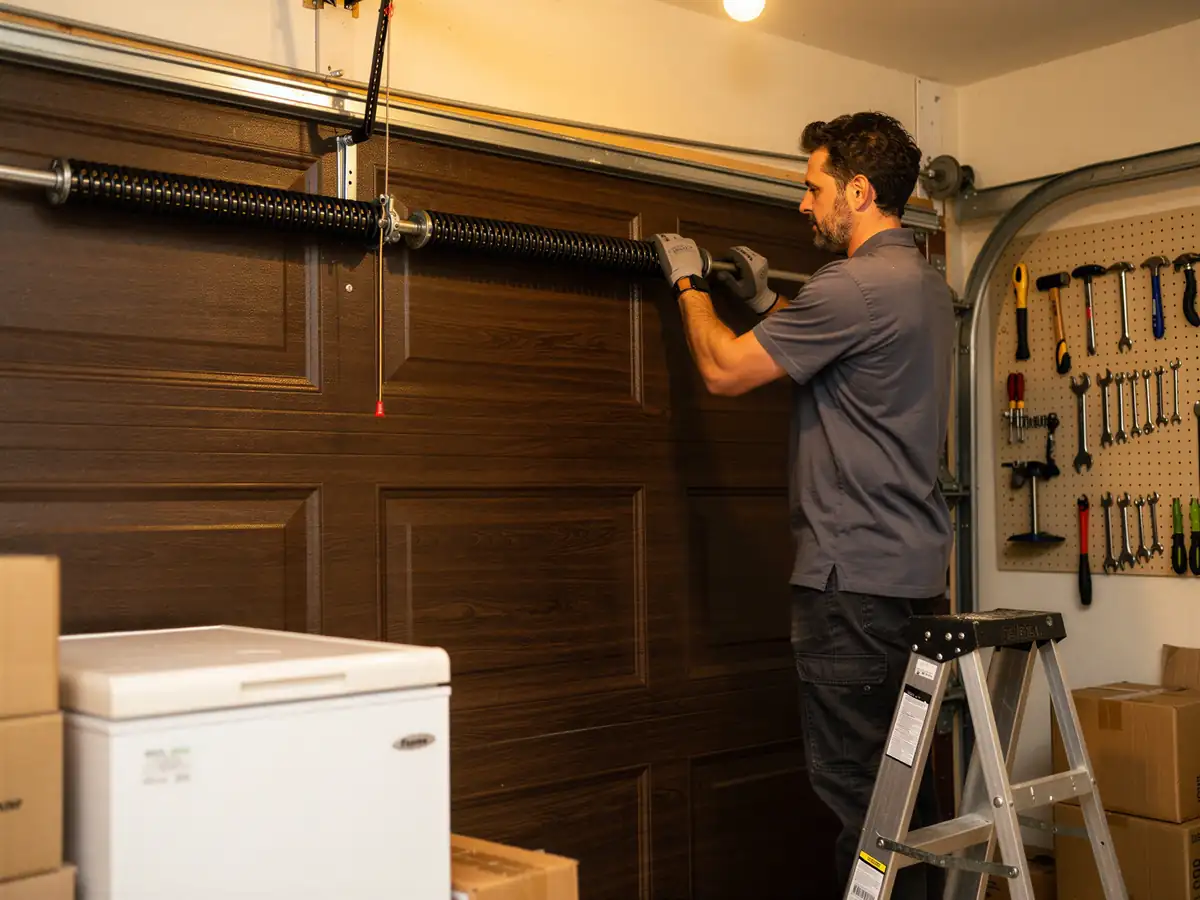
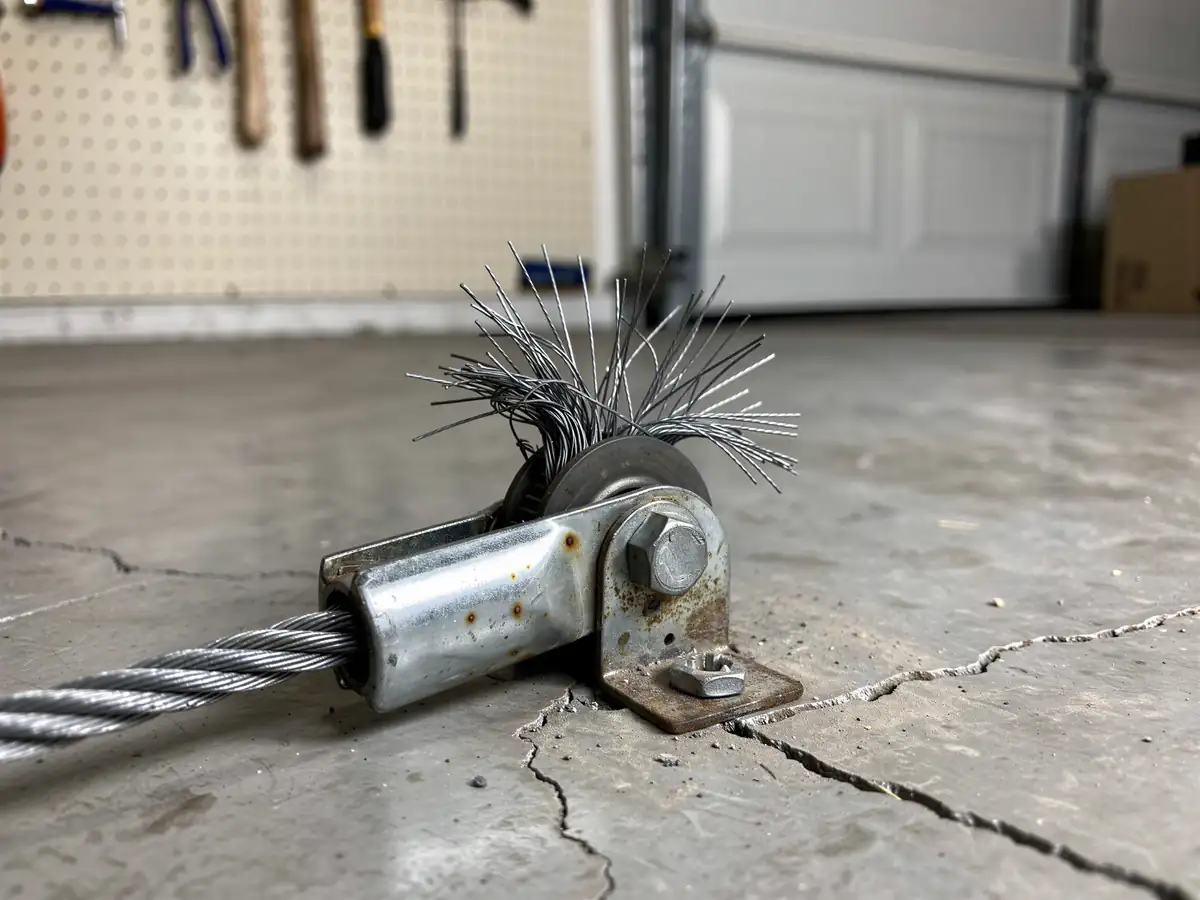
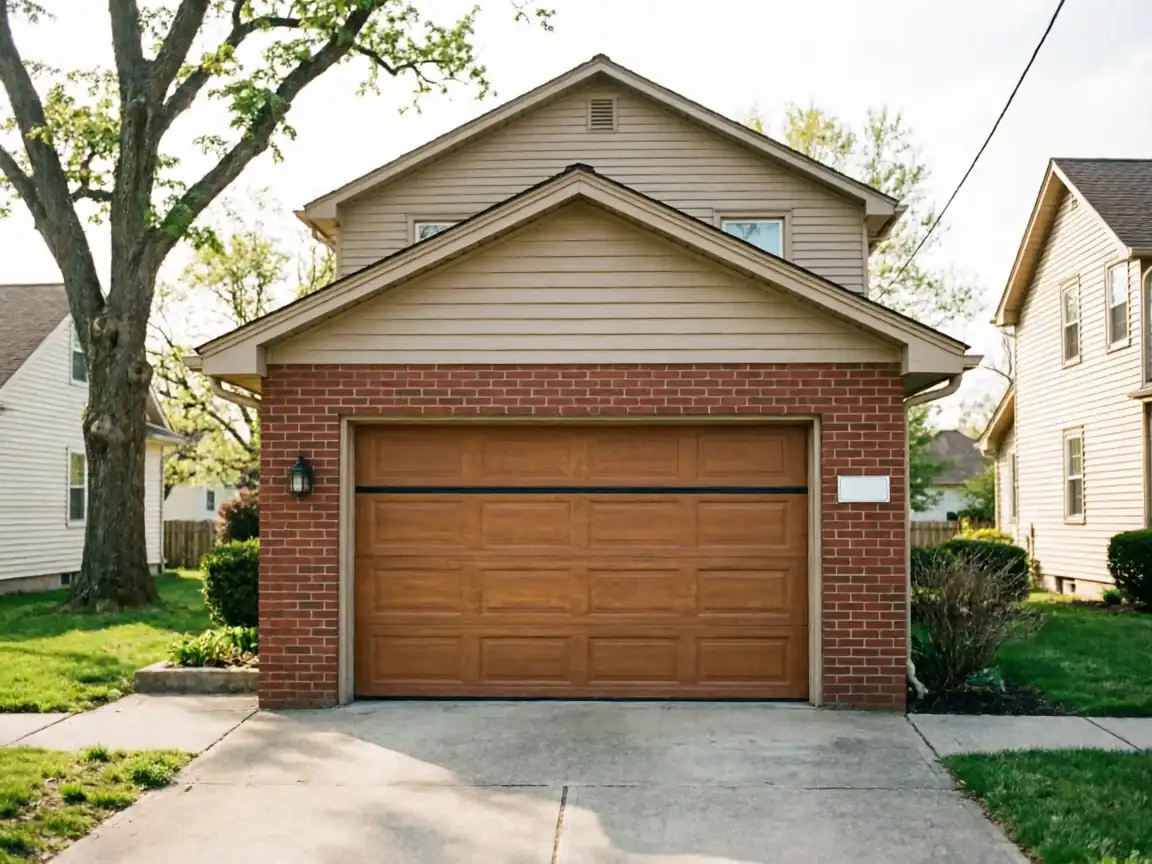
A torsion spring from a 1983-era door holds real tension, and the winding cones on that generation of hardware are not the cones you'll find in a big-box kit today. If you've got the door open and the panels are sagging unevenly, that's usually a cable off its drum, not the spring itself, and you can sometimes re-seat it yourself if the door is down and the opener is unplugged. Lubricating rollers and hinges twice a year is worth doing - a dry roller on original 1980s track is what turns a quiet door loud. Past that, we'd rather you call than wrist a spring wound for a door this old. The failure mode on these isn't a slow leak of tension, it's a sudden release, and the bar that resists it is sized for the door, not for a general-purpose wrench set. If the opener is the problem - grinding, stalling halfway, running without moving the door - that's almost always the gear or the circuit board, and neither is a safe place to start without pulling the cover and knowing what you're looking at.
Why This Fails Locally
Minnesota winters put a cold-climate load on steel doors and their hardware, and a door built to the standards of 1983 wasn't engineered with today's insulation or sealing in mind. On a door this age, the weak point is usually the bottom seal and the original non-insulated steel panel, which means the garage runs colder than a newer install would, and the moving parts - springs, cables, hinges - see more contraction and expansion through a Minnesota winter than they were designed around. That's a maintenance issue more than a code issue, but it compounds: a spring that's already fatigued from four decades of cycles loses more tension capacity in cold weather, and that's when it lets go. We don't see this pattern the same way in homes with newer stock, where the hardware and the insulation were specified together. Here, they weren't, because they predate the products that make that possible.
How Long You Are Without the Door
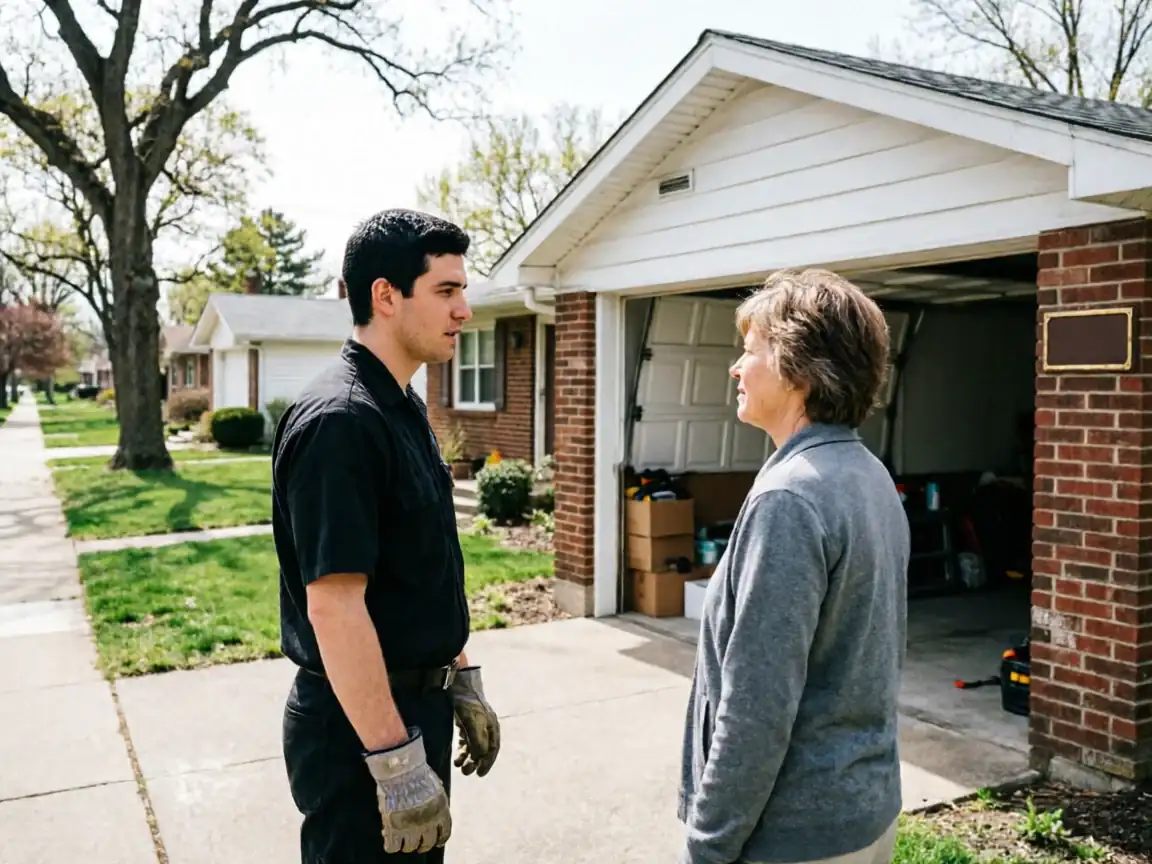
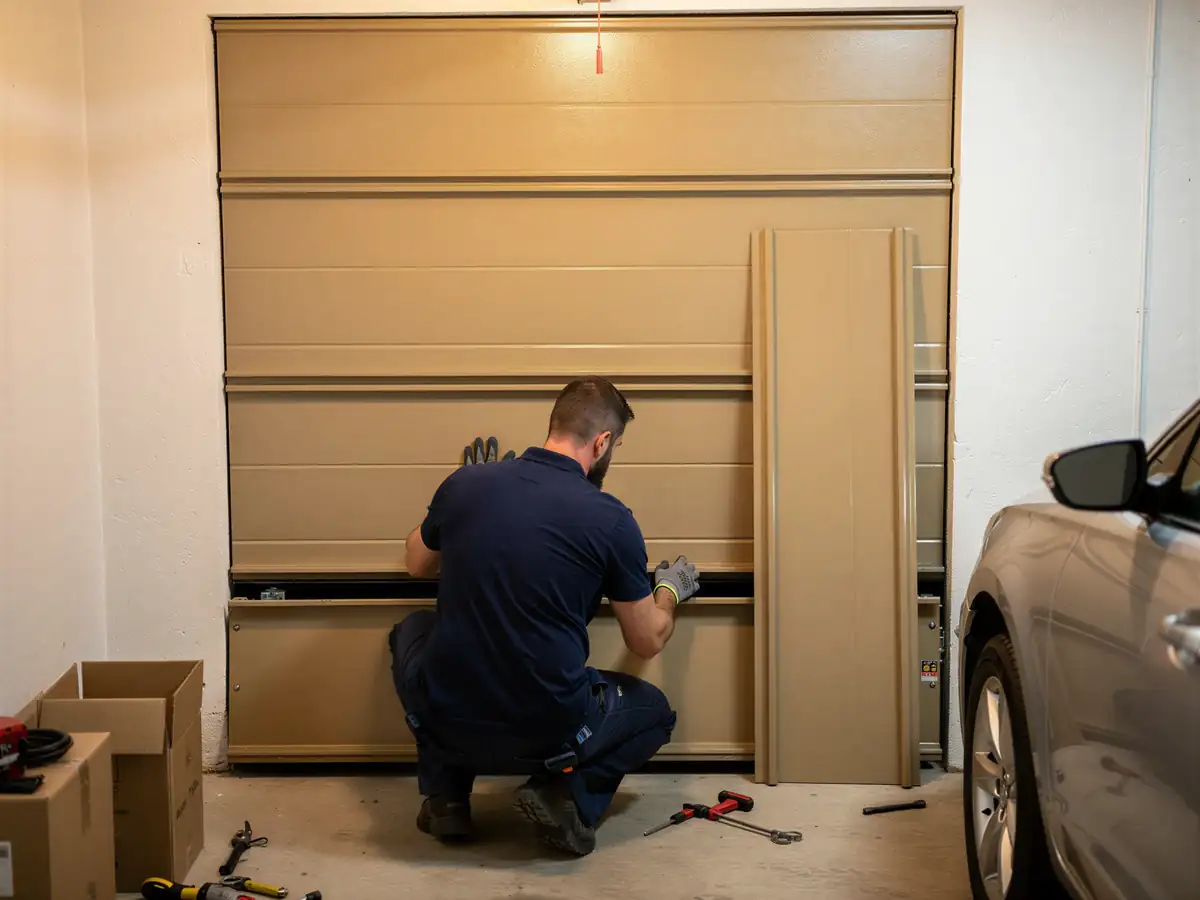
We run from Farmington, about 15 miles out, so the job here starts with that drive before any tools come out of the truck. Once we're on site, a spring replacement or a roller job is usually done inside one visit. Where it stretches out is parts we don't carry stock of - an insulated panel section for a door that's been out of production for years, which we may need to special-order rather than fabricate on the spot. We'll tell you at the door, not after, whether your repair is same-visit or needs a return trip for parts.