How Long You Are Without the Door
Northfield is about 14 miles out from our Farmington shop
Which is close enough that a panel job isn't a special trip, but far enough that we don't want to make it twice. That's the whole shape of how a panel call works here: we load the truck once, with the right panel, the right end stile hardware, and the right fasteners for a door built in the early 1980s, because that's when most of this town's garage stock went up.
- 14 miles
If we show up and the panel doesn't match
Wrong rib profile, wrong width, wrong color run - we're driving 14 miles back empty-handed and you're waiting again. So the time you're without a working door usually isn't the repair itself, which takes an hour or two once we're on site. It's the stretch before that, while we confirm measurements and order the panel if your door's profile has gone out of production, which happens a lot with doors this old.
- 14 miles
We'd rather take an extra day to get it right than drive out twice with the wrong piece
Doing It Yourself
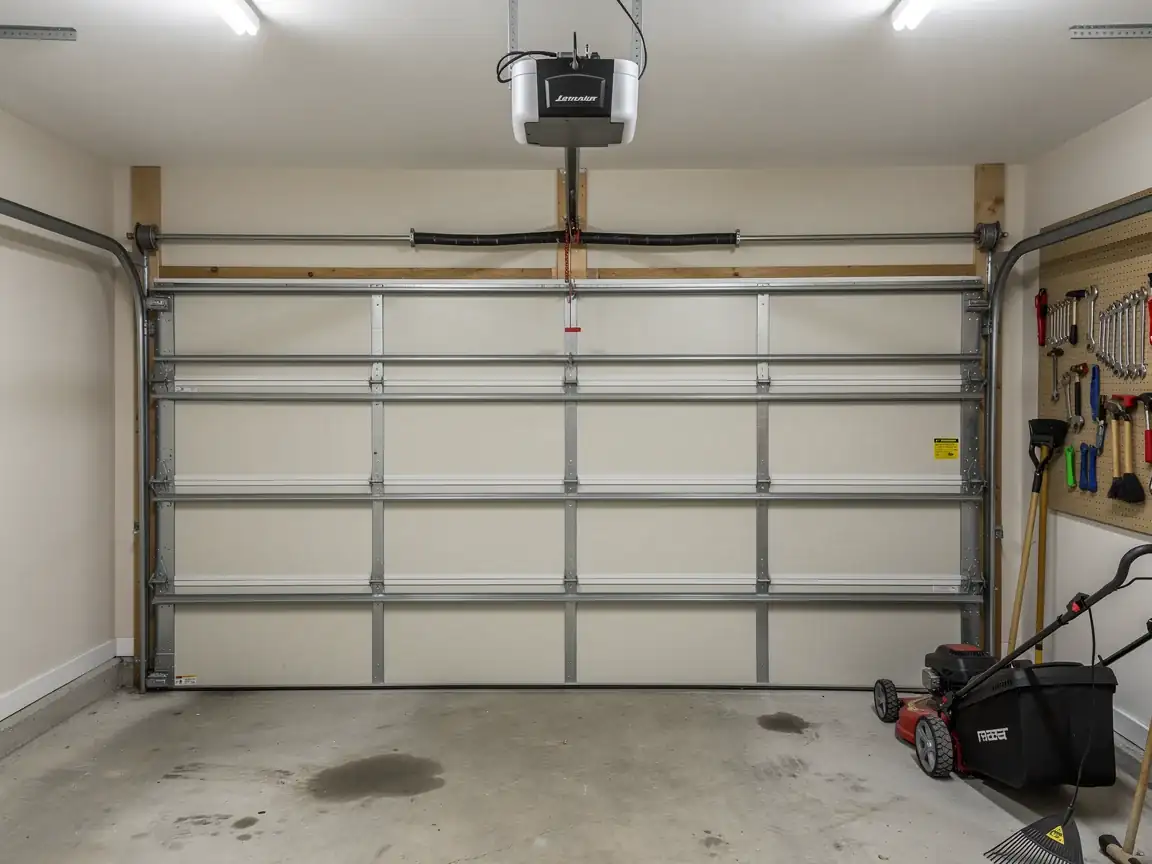
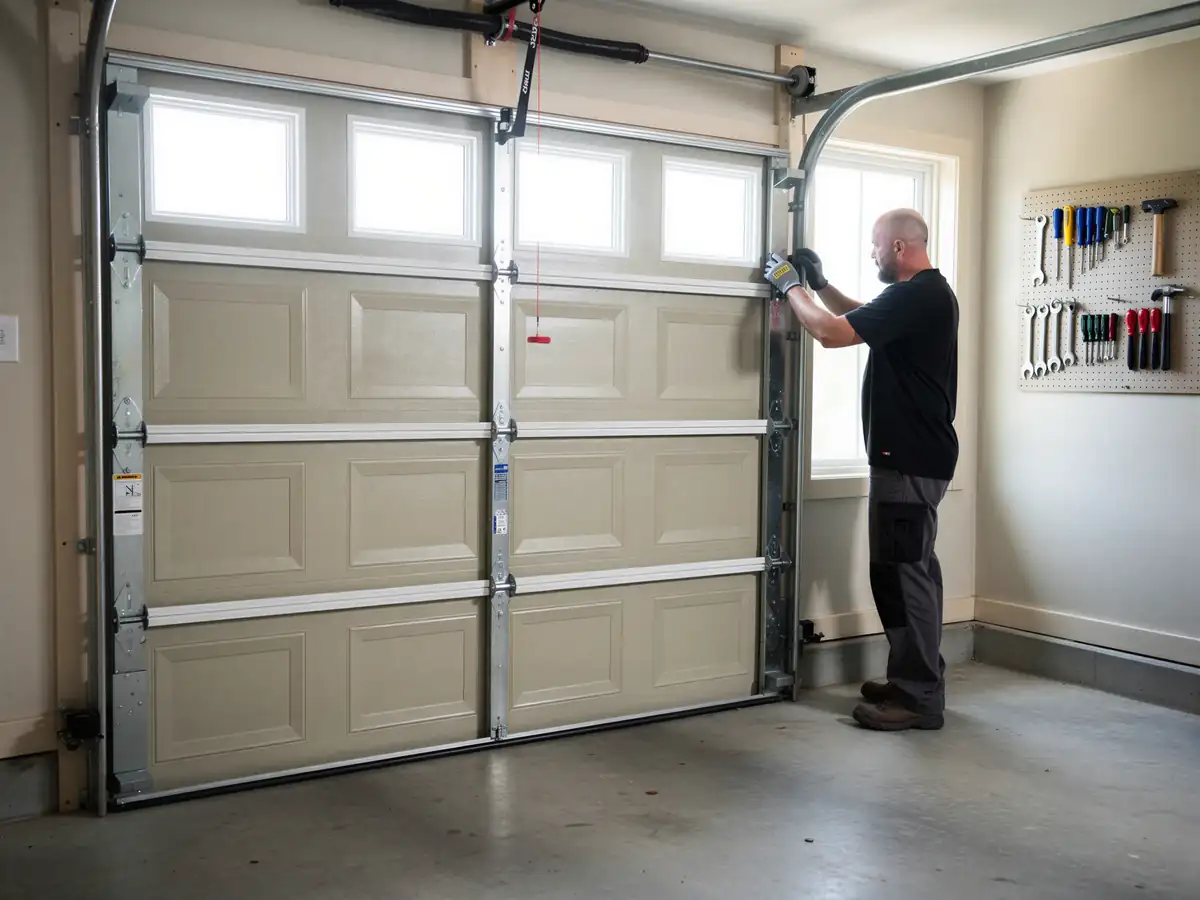
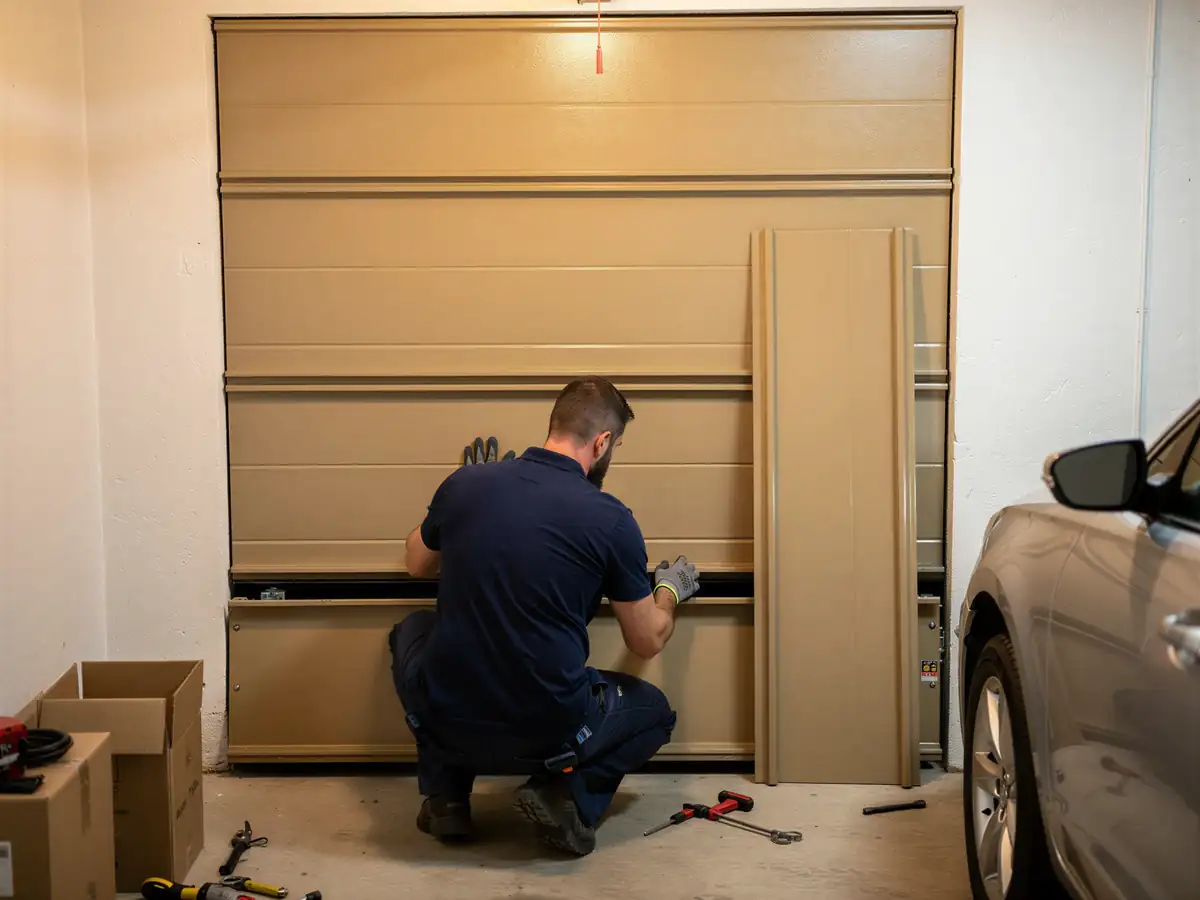
A single dented or cracked panel on a sectional door looks like a bolt-off, bolt-on job, and on some doors it almost is. The complication is alignment. Panels carry the track rollers and the hinge plates that the rest of the door leans on, and a panel that's even slightly out of square will bind the whole section against the track - you'll feel it as grinding or a door that reverses on its own.
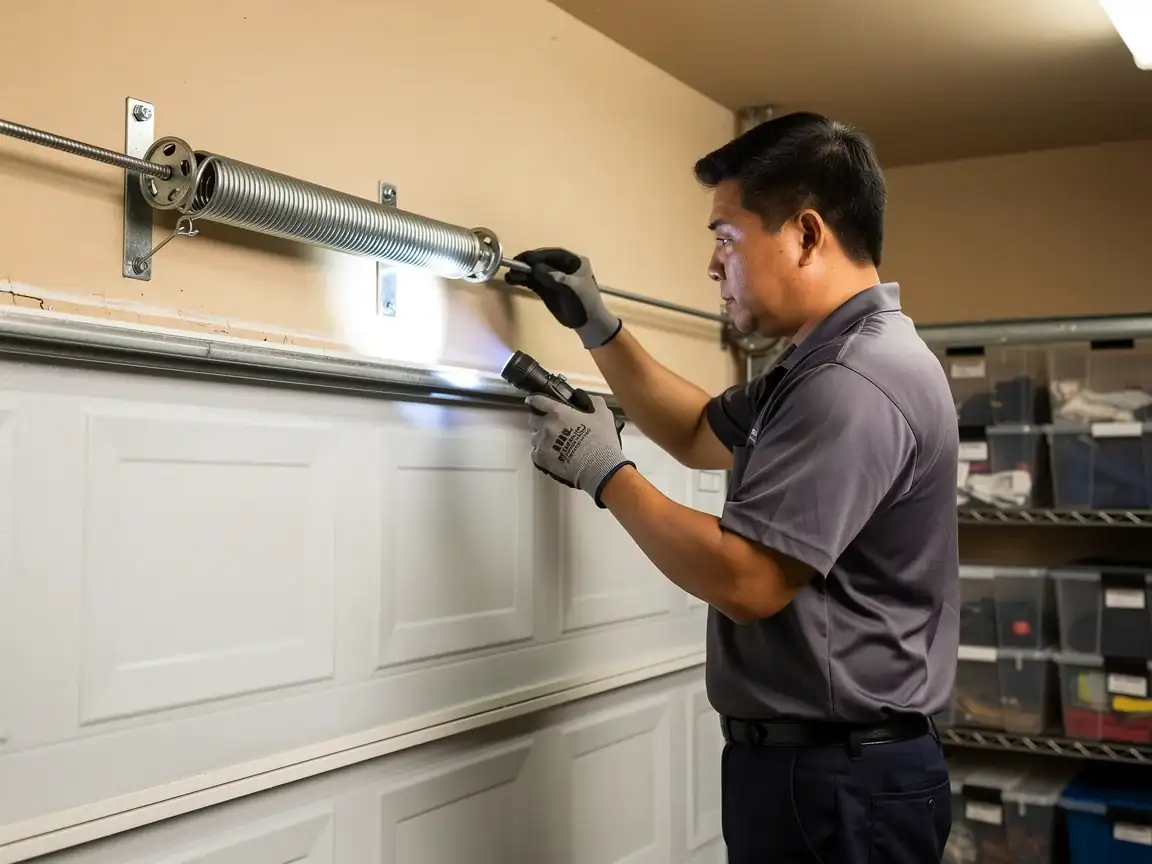
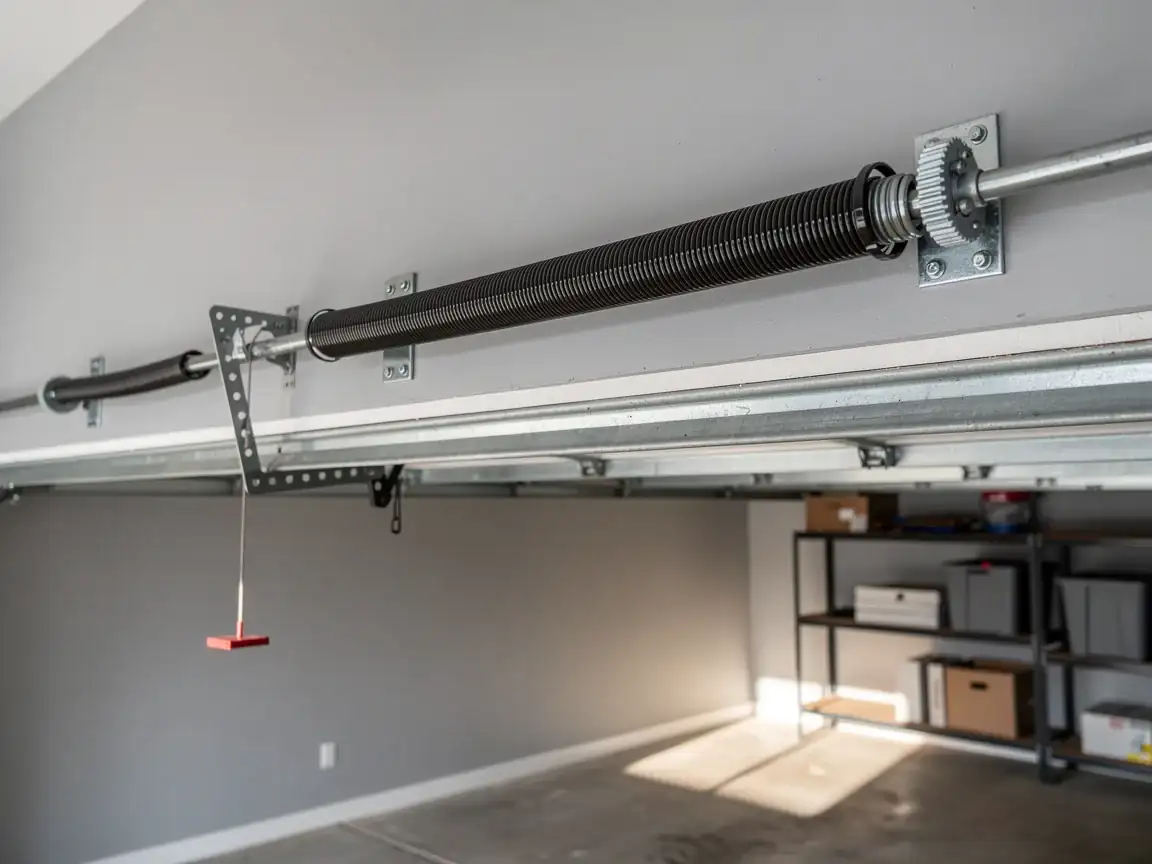
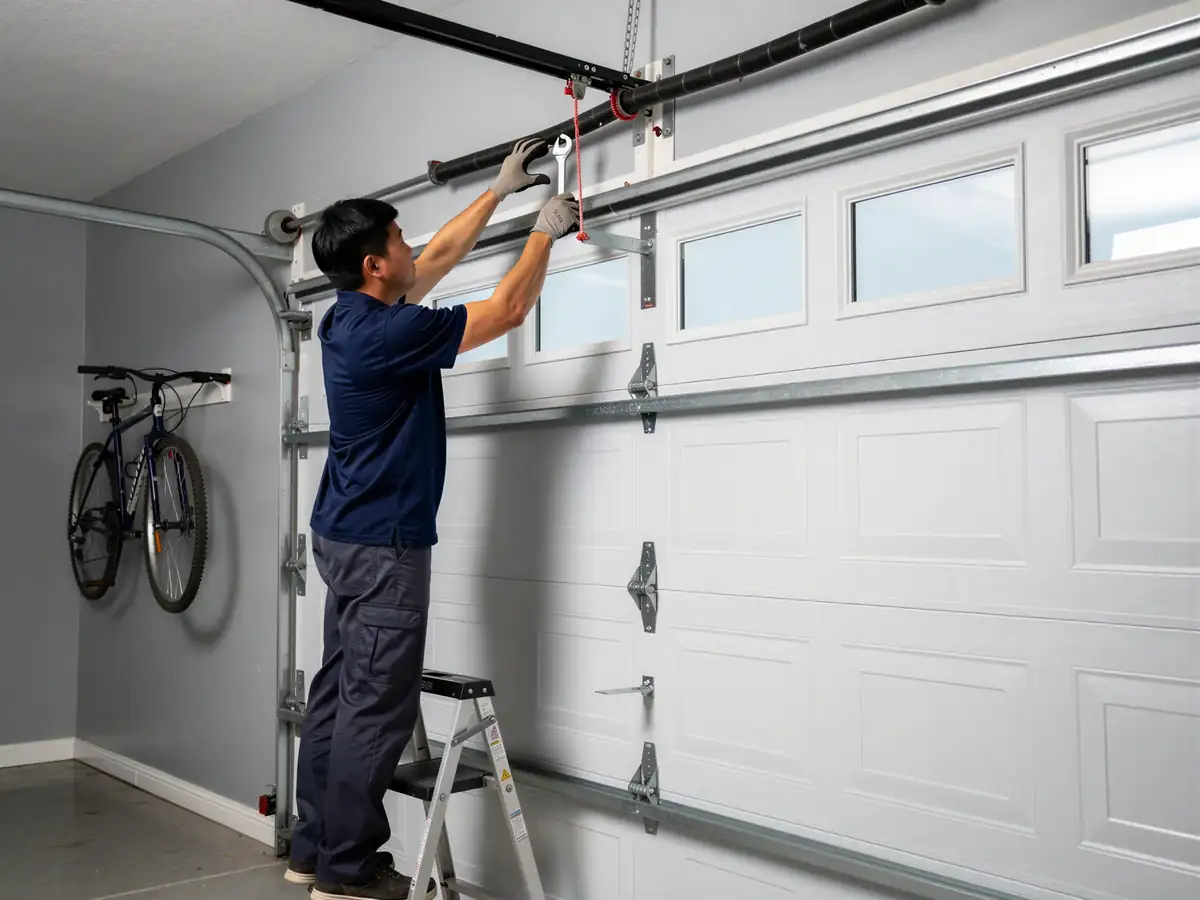
We're honest about this one: if your door is a common size and a current model, a careful homeowner can swap a bottom panel without us. What we don't recommend doing yourself is working with the door under tension - meaning anything near the spring or cable side while the door is loaded. That's where people get hurt, and it's also where a panel swap turns into a second repair if the cable jumps the drum mid-job.
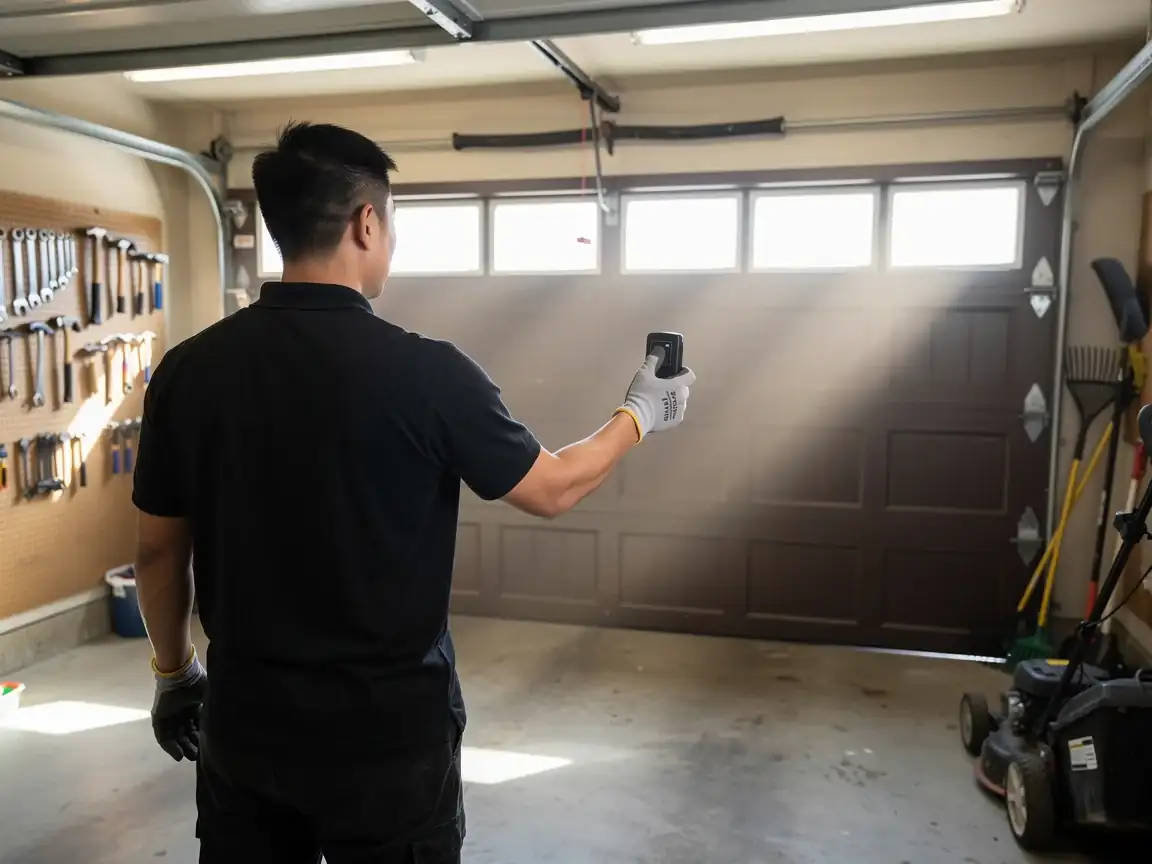
If the panel is cracked but the door still opens and closes square, it's a fair weekend project. If it's binding, racked, or the opener is straining, that's past a panel fix and into spring or track territory - call before you force it.
Parts We Carry
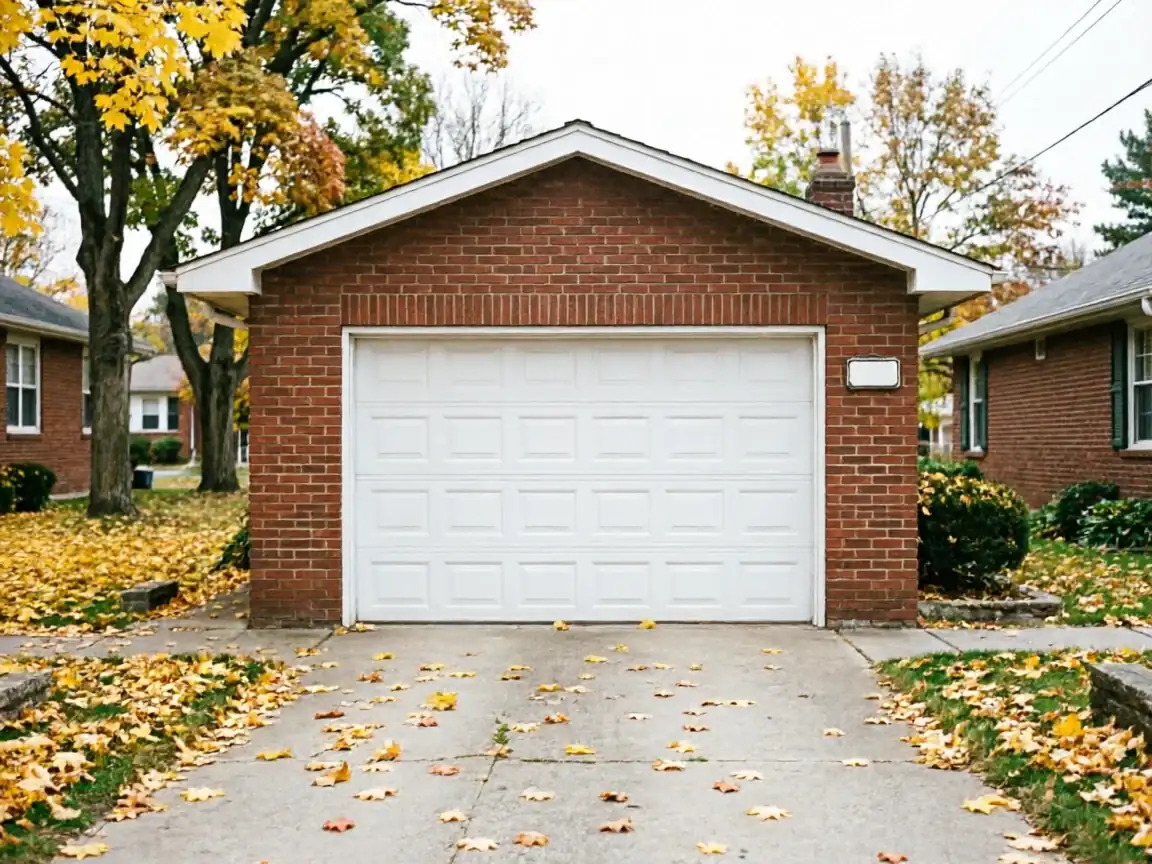
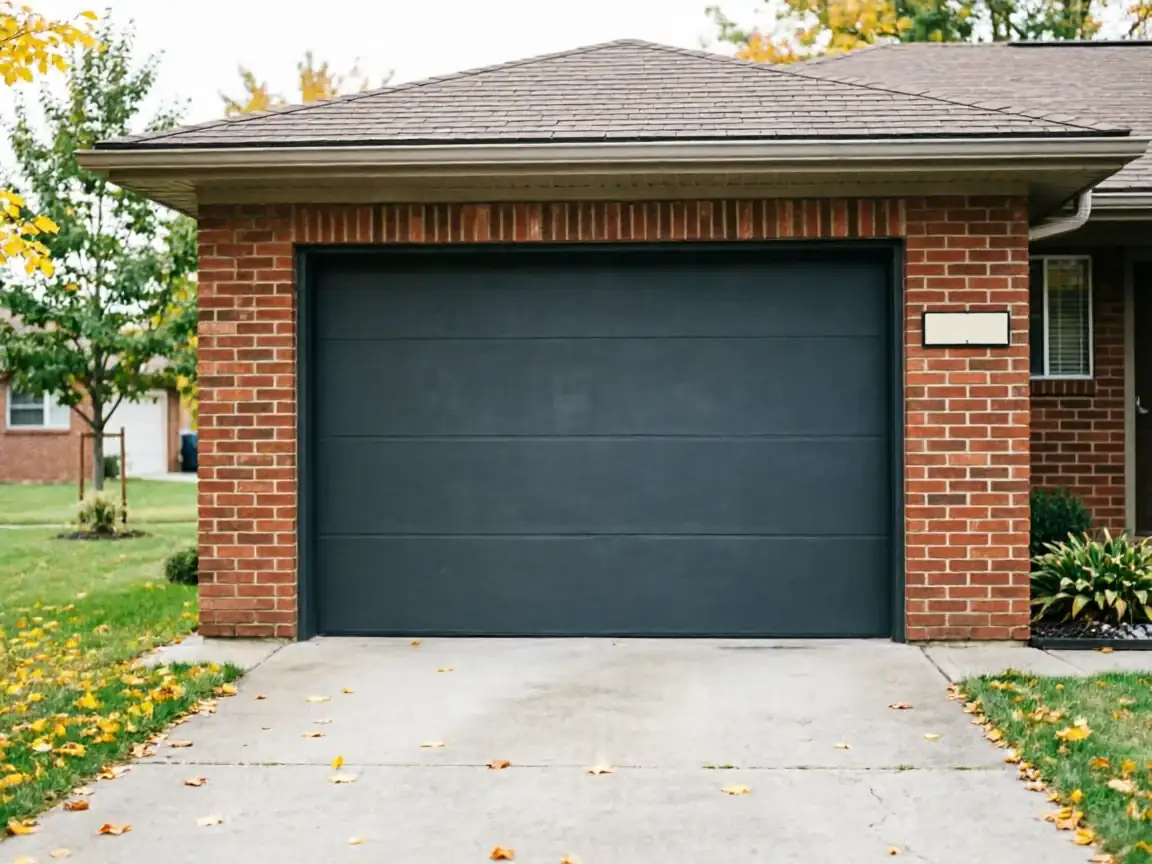
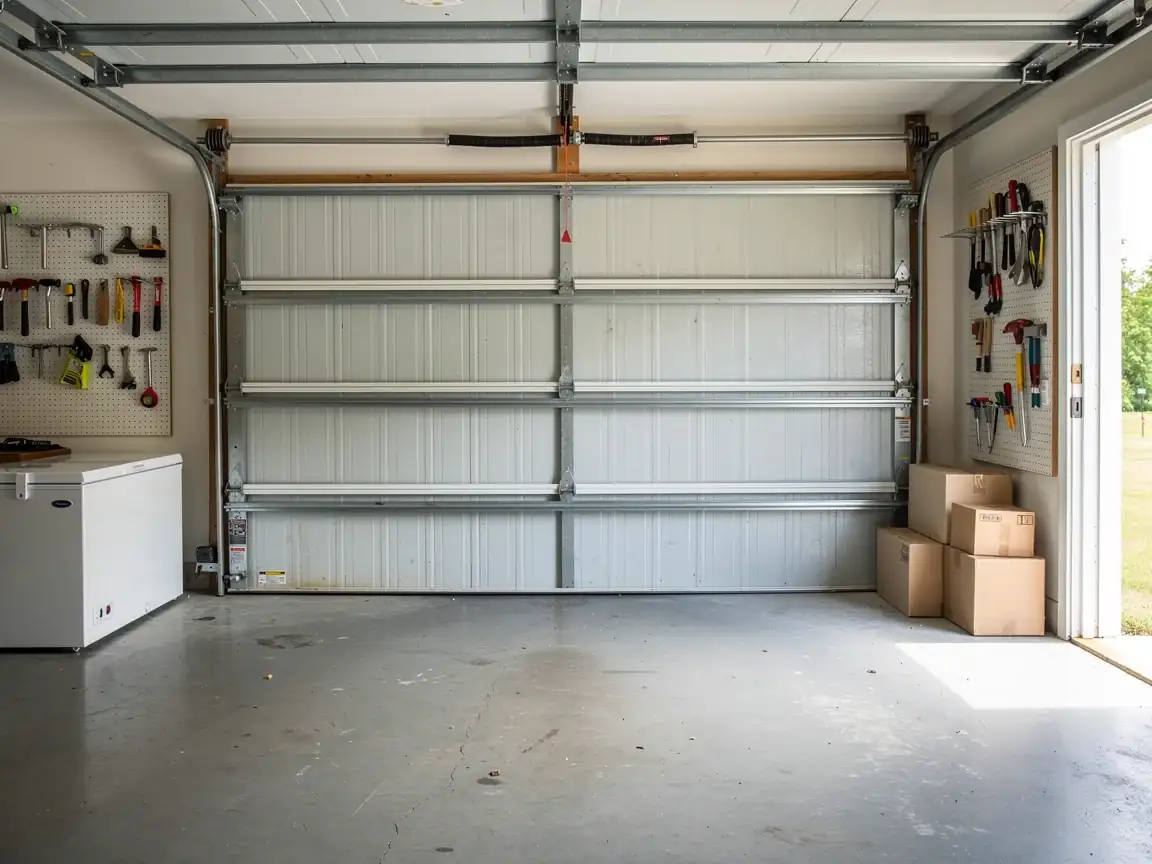
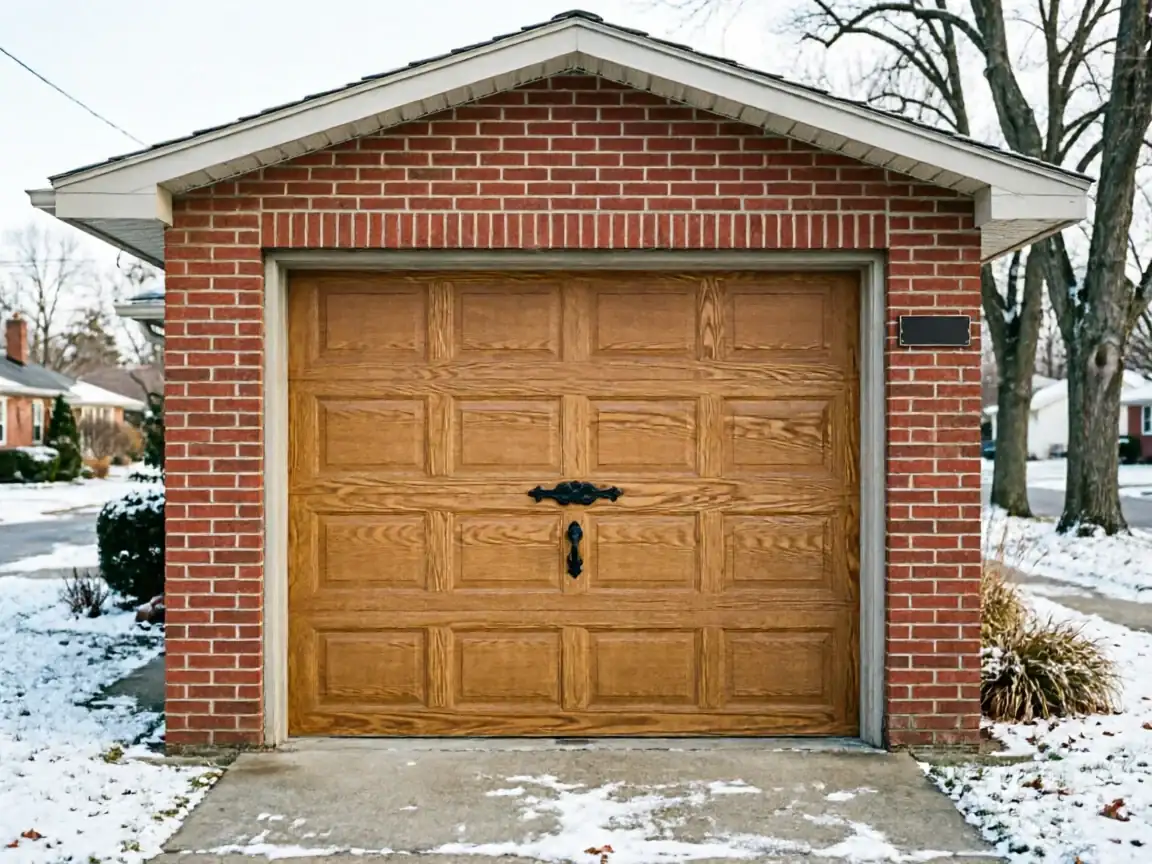
Because most houses in this area were built across the 1955-2004 run, with the heaviest concentration from the 1980s and 90s, the panel we're usually sourcing for Northfield is a steel sectional profile from that same window - raised-panel or flush, 24 or 27 inch sections, the kind that shipped with a lot of first-generation torsion setups.
We carry common widths and the standard steel gauges on the truck. What we don't keep in stock are discontinued color runs or embossed wood-grain profiles from the early run of that era - those get special-ordered once we've confirmed the match against your existing panels, because color and rib depth both drift between manufacturing runs even on the same model line.
If your door is aluminum or an older wood composite rather than steel, that changes the fastener and weatherstrip channel too, so we ask for a photo of the section edge before we quote the part, not just the dent.
Why This Fails Locally
This area sits in a cold climate band, not an extreme one
But enough that steel panels take a particular kind of damage over a winter. Thin-gauge sections from the 1980s and 90s flex more than current stock, and repeated freeze-thaw cycling works at any existing dent or seam until it cracks rather than just dings.
The other local factor is simply age distribution
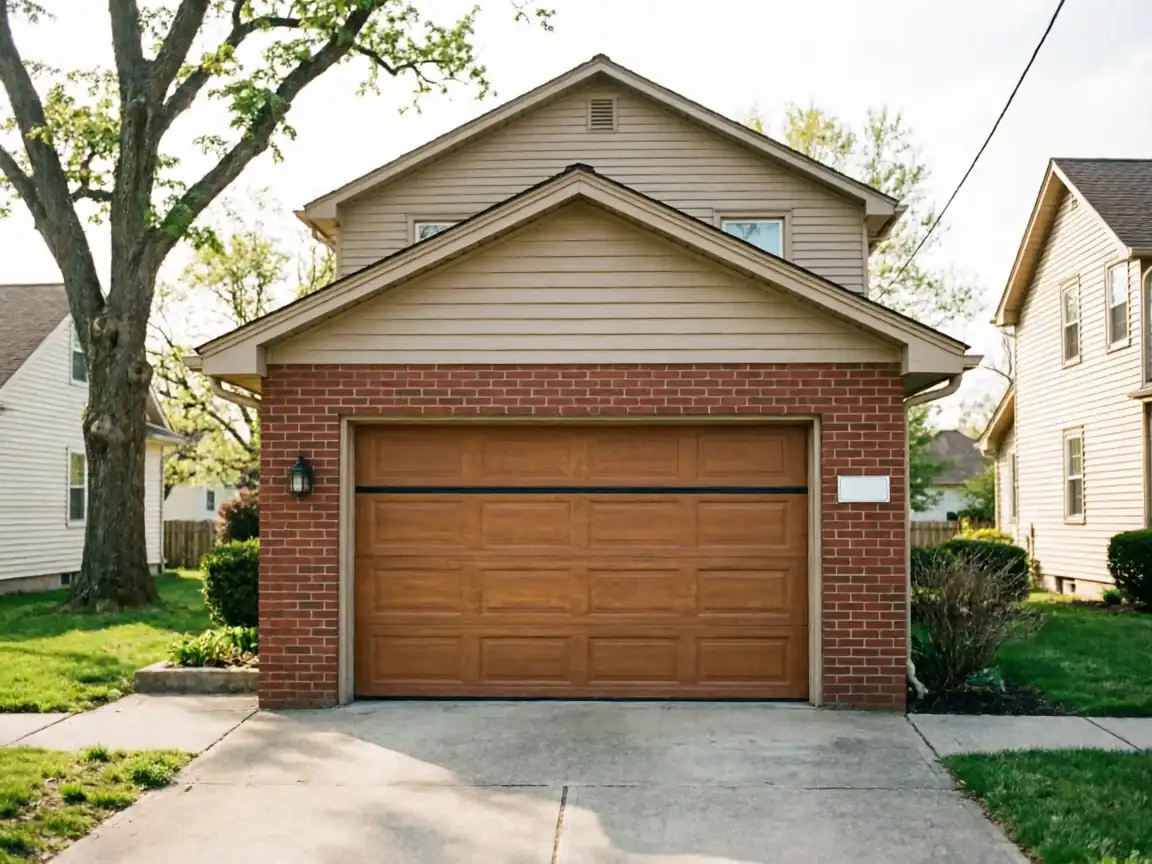
With houses here clustered around a median build year of 1983, a lot of doors are original or one replacement removed from original, and original panels from that period were painted, not powder-coated, so touch-up paint from the hardware store rarely matches after 40 years of UV exposure. That mismatch is cosmetic, not structural, but it's the reason people call us for a full panel instead of a patch - once one section is visibly off-tone, the whole door reads as patched.
- 40 years
We're not going to tell you cold weather alone cracks panels
Impact does that, usually a car bumper or a sports ball. What the cold does is make an already-stressed panel more likely to go instead of just denting and holding.
The Complications
The main complication for a town like this isn't the labor, it's the match. With roughly 6,368 households and most of the housing built around the same decade, we see the same handful of panel profiles over and over, which sounds like it should make sourcing easy - and it does, until the specific run has been discontinued, which is common once a door passes the 30-year mark.
When we can't match the exact rib and gauge, we're honest about the options: replace just the damaged section in a close-but-not-identical finish, or replace all the sections so the door reads as one uniform piece. The second costs more but looks right; the first costs less and is visible if you look for it. We'll tell you which one applies to your door before we order anything, not after.
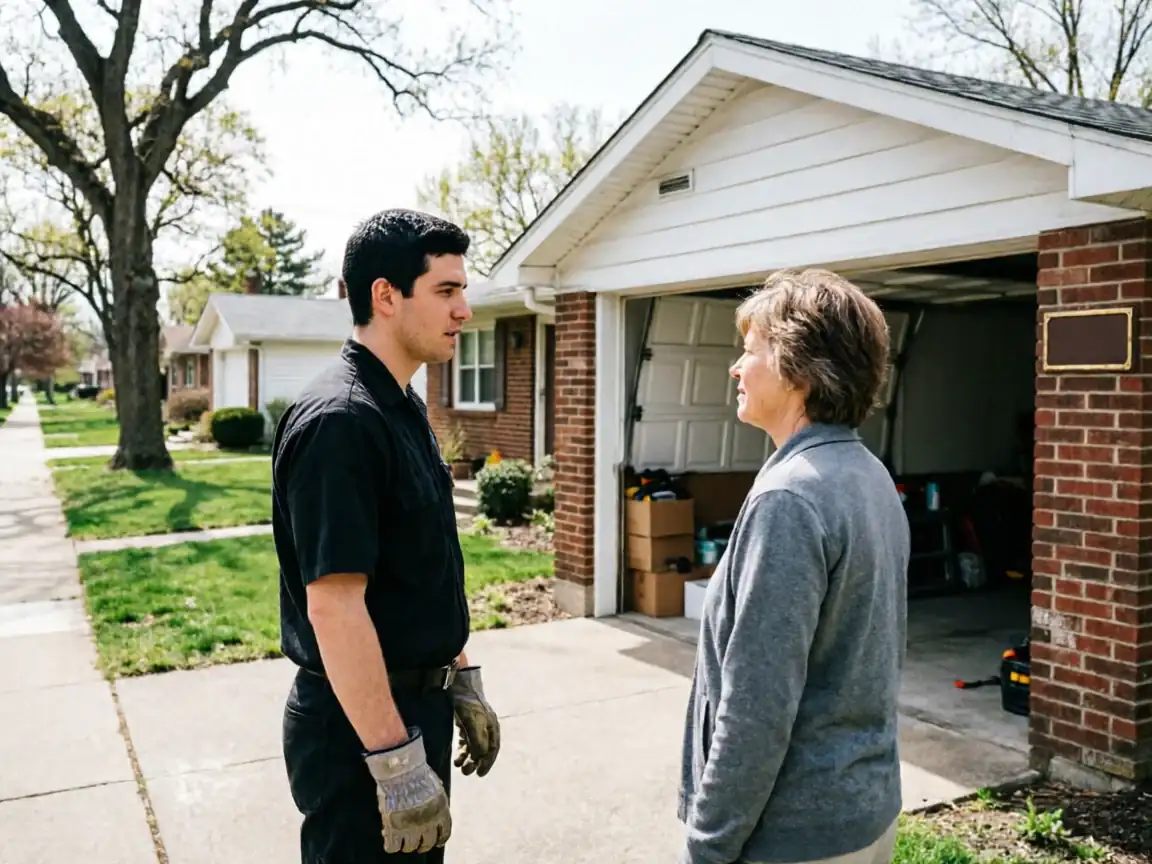
The other wrinkle is the drive. Because we're coming from 14 miles away, we try to confirm the spring type and opener model over the phone or from photos first, so the panel job doesn't turn into a second visit for an unrelated part we didn't know we needed.
Booking a Visit
At a median household income of $92,000, slightly under the wider service area's $93,077, most of what we see in Northfield are owners replacing a damaged panel rather than the whole door - repair over replacement, when the door is otherwise sound. That's the job we quote for first unless you tell us otherwise.
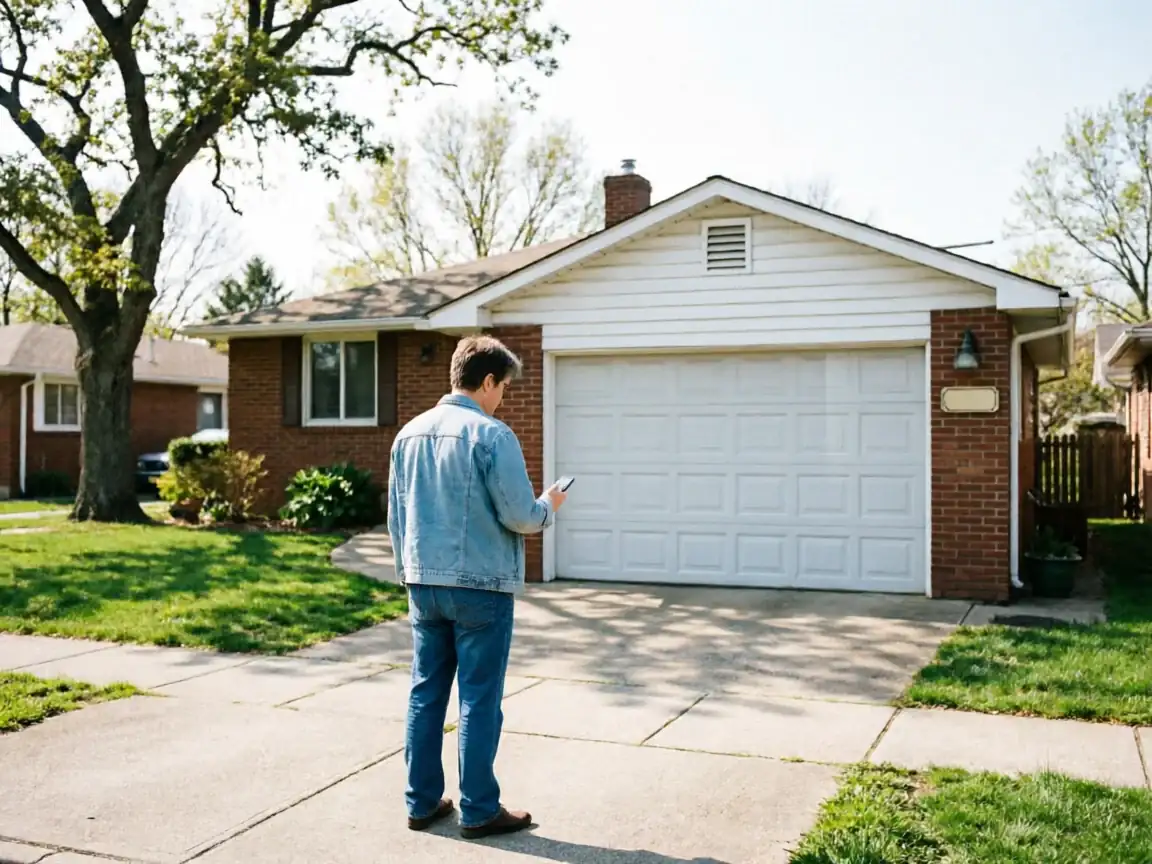
To book, send us the door's age if you know it, a photo of the damaged section including the edge profile, and the brand name if it's printed on the bottom bracket or the owner's manual. That's enough for us to pull a likely match before we make the 14-mile trip out, which keeps the visit to one appointment instead of two.
See our coverage for Northfield or the general panel replacement page for the Farmington service area if you're comparing panel work against a full door swap.